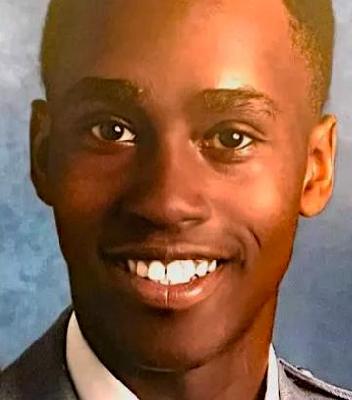
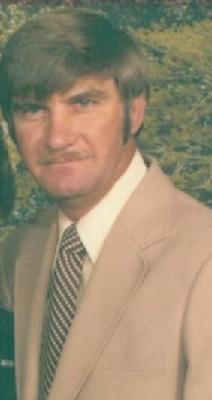
James Lynwood “Jimmy” Norford Jr., a 37-year-old man from the Charlottesville area, was killed on August 24, 1976, while working at a rural business in the Stony Point area of Albemarle County, northeast of Charlottesville. Contemporary reports described Norford as a father of six and identified him as the manager of a Texaco station. Later reporting from the Charlottesville Daily Progress identified the location more specifically as Bell’s Store, a longtime country store at Stony Point.
Norford was robbed and shot in the back of the head during the morning hours, turning what had begun as an ordinary opening of the store into a homicide that would eventually be connected to a much larger series of killings across the country.
The man responsible was Allen Leroy Anderson, a fugitive who had left a halfway house in Seattle on June 1, 1976, and embarked on a cross-country crime spree involving stolen automobiles, stolen credit cards, robberies and murders. Investigators determined that a. 22-caliber Colt Frontier revolver had been stolen in Texas during Anderson’s travels. That type of weapon became especially significant because a succession of victims in several states were killed with shots to the back of the head from a. 22-caliber firearm. Only two days before Norford was killed, Stuart Drake Davis had been found bound and shot to death in Alexandria, Virginia.
Anderson later gave his own account of what happened inside Bell’s Store. He said he entered as the business was opening and obtained something to eat. According to Anderson, when he attempted to pay, the. 22-caliber pistol he was carrying inadvertently became visible. Norford saw the weapon and stared at him. Anderson said he then attempted to force Norford into a back room. He later claimed that he interpreted Norford’s movements as threatening, believing Norford might slam a door or throw boxes at him. Anderson responded by shooting him. Whatever Anderson later said about his perception of Norford’s actions, police accounts were unequivocal that Norford was robbed and fatally shot in the back of the head.
Anderson did not remain in Virginia. He continued traveling and was linked to additional killings in other states during the following weeks. Investigators eventually began recognizing the similarities among the crimes: victims encountered during robberies or while Anderson was traveling, the use of a. 22-caliber weapon and, repeatedly, a gunshot to the back of the head. A major break came through Washington, D.C., Metropolitan Police Detective Clyde R. Pulsifer, who was initially working an automobile-theft investigation. By tracing stolen vehicles and receipts generated with stolen credit cards, Pulsifer reconstructed Anderson’s movements across the country and connected him with homicides in Virginia and several other states.
On October 28, 1976, law-enforcement officers stopped a stolen van near Malibu, California. Anderson was behind the wheel, and authorities recovered a. 22-caliber revolver. His arrest allowed detectives from the different jurisdictions to begin assembling their cases against the same traveling suspect. By January 1977, Albemarle County Sheriff George W. Bailey publicly stated that Anderson would be charged in Norford’s killing. Virginia authorities subsequently began proceedings to have Anderson brought back to the state to answer for the Virginia homicides.
Anderson was eventually prosecuted in Albemarle County for Norford’s death. Rather than contesting the case at a jury trial, he pleaded guilty to murdering Norford in Albemarle County Circuit Court. The court sentenced him to life imprisonment. During an interview with a Charlottesville Daily Progress reporter after his conviction, Anderson openly admitted carrying out a series of killings during his 1976 travels. In describing the encounter with Norford, he acknowledged that he knew the storekeeper’s life was under his control once the gun was involved and expressed no remorse for killing him.
The conviction closed the question of criminal responsibility for Norford’s death. Anderson accumulated murder convictions and lengthy sentences in multiple states, while other jurisdictions maintained holds or unresolved cases against him. He ultimately spent the remainder of his life incarcerated at the Minnesota Correctional Facility in Stillwater. He was denied parole and died in prison on February 3, 2021. For James Norford’s family and the Charlottesville-area community, the crime that initially appeared to be a brutal robbery at a quiet Stony Point country store ultimately proved to be one episode in Anderson’s violent 1976 journey across the United States.