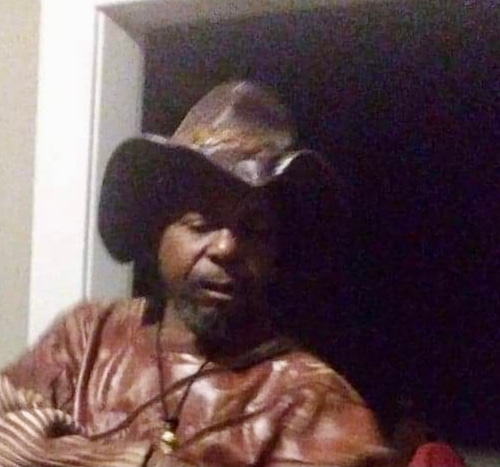
John Mullins, a 55-year-old Black man from Birmingham, Alabama, died on August 30, 2013, after a stabbing in the city’s 500 block of 41st Street North. Late that Friday night, police were called to the area on a report of a person down, and when officers arrived they found him outside with a stab wound to the back. Birmingham Fire and Rescue rushed him to UAB Hospital, but he did not survive.
His death quickly became one more violent entry in a difficult year for the city, but to the people who knew him, it was not a statistic at all. It was the sudden and brutal end of John David Mullins, a man whose funeral was held the following week in Birmingham, with burial at Oakland Cemetery.
In the first public accounts of the case, detectives were still trying to piece together his final movements. Police said there were no known witnesses to the stabbing itself, leaving investigators to work from fragments of what others had seen and heard before the attack. What emerged was a haunting detail: several people reportedly told authorities that Mullins had been seen arguing with a suspect earlier that evening. That clue suggested the killing may have grown out of a confrontation already in motion before the fatal wound was delivered, but it did not immediately lead to an arrest.
As the weeks passed, the case remained open and the silence around it became part of the story. Birmingham authorities publicly appealed for help, stressing that Mullins’ killer was still unidentified and that someone in the community likely knew what had happened in those last hours. The picture painted by the available reporting is one of a case that began with urgency but also with frustrating gaps, a man found gravely wounded in the night, a reported argument beforehand, and investigators trying to pull a name out of rumor, fear, and scattered memory.
Based on the accessible online reporting, the case was unsolved in its early stages and police had made no arrests at that time. I did not find reliable, accessible online reports confirming a later arrest, named suspect, trial, or conviction in Mullins’ death beyond the early references to an unidentified person he had allegedly argued with before he was stabbed. That leaves the public account of his killing with an unfinished quality: a violent death, a promising but incomplete lead, and a case that, at least in the reporting that remains readily available online, never fully told the public who took John Mullins’ life or whether anyone was ever held to answer for it.