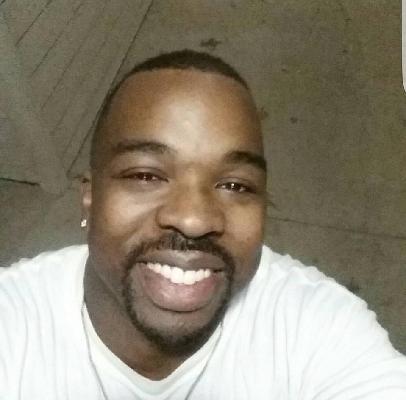
Kendrick Desmond Anderson was a 41-year-old African American man whose life was cut short by gunfire in Memphis, Tennessee, on February 25, 2025. Known by those close to him as “KeKe,” he was remembered as fun, loving, and outgoing, someone whose presence could brighten a room and whose easy smile made people feel at ease. Friends and family described him as a devoted father of five children and a hardworking provider.
He worked as an equipment operator for Milwaukee Tool and also had ties to KA Lawn Service, a blue-collar life built around steady work and caring for the people who depended on him. After his death, arrangements were made for services at Leflore Legacy Academy with visitation at Pilgrim Rest Missionary Baptist Church, a traditional farewell that reflected both the love of his family and the roots that stretched beyond the city where he died.
On the day of the shooting, Anderson was at a home on Ashridge Place in the Hickory Hill neighborhood of southeast Memphis, a residential street where neighbors were used to the sound of traffic and children, not gunfire. According to a police affidavit later summarized in news reports, three men were working together to move a trailer from the side of the house. At some point during that routine task, tension flared. One of the men drew a gun and fired multiple times at Anderson, turning an ordinary workday into a deadly confrontation. Officers responding to the scene found him suffering from gunshot wounds, and he was pronounced dead where he fell.
In the immediate aftermath, the killing was reported simply as yet another homicide in Hickory Hill, a neighborhood already wearied by violence. Early coverage spoke only of an unnamed victim found dead at an address on Ashridge Place and noted that the suspect and victim were acquainted, hinting at a personal dispute rather than a random attack. As neighbors watched patrol cars and crime-scene tape encircle the house, the details remained sparse: a late-February night, a man dead on a quiet street, and the unsettling knowledge that the people involved knew each other. For Anderson’s family, however, there was nothing abstract about the news; it was the shattering of an entire world.
Within days, Memphis police announced an arrest. Investigators identified 22-year-old Glentrell Dodd as the man who had pulled the trigger on Ashridge Place. Court records and arrest reports show that Dodd was taken into custody and charged with first-degree murder in connection with the shooting. A later summary of the case noted that no bond had initially been set for him, underscoring the seriousness with which the charge was treated. Accounts of the affidavit describe a straightforward narrative from law enforcement’s perspective: three men working together, a dispute or breaking point that has not yet been fully explained, and then a sudden eruption of violence that left one of them dead and another facing a life-altering criminal charge.
As months passed, public reporting focused mainly on the fact of the arrest and the charge, with fewer updates about what happened next inside the courts. Available records indicate that Dodd’s case moved into the judicial system as a first-degree murder prosecution, but there have been no widely reported stories of a completed trial or conviction, suggesting that the legal process is still unfolding or that later proceedings have not drawn the same level of media attention as the initial arrest. While lawyers argue and judges set schedules behind courthouse walls, Anderson’s family and friends are left with a far more intimate accounting: five children growing up without their father, a community remembering a man who worked with his hands and tried to take care of his own, and a February day in Memphis that cannot be undone.