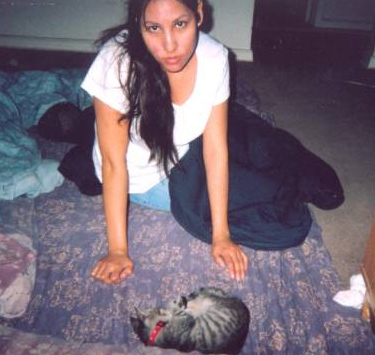
An indigenous woman's remains are found in a rolled blanket in a pile of trash In the fall of 2005, a young Native American woman's life was tragically cut short, leaving a mystery that continues to haunt her family and investigators. Lakota Rae Renville, a 22-year-old member of the Sisseton-Wahpeton Sioux tribe, was found deceased on October 16, 2005, in a gravel lot in Independence, Missouri. A pedestrian discovered her body near Pitcher Road, initially mistaking the bundle for a pile of discarded trash.
Renville’s nude body was wrapped in carpet padding and a distinctive southwestern-style blanket adorned with a steer skull. An investigation revealed she had been brutally beaten and stabbed to death in what authorities described as a 'vicious' and 'brutal' attack. It is believed she was killed at another location before her body was left in the vacant lot.
Originally from South Dakota, Renville had moved to the Kansas City area two years prior to live with a man she had met online. Her family expressed that she was shy and not prone to a high-risk lifestyle, leading them to believe she may have been a victim of sex trafficking, a suspicion authorities have also noted. Police learned that she may have been working as a prostitute along Independence Avenue in Kansas City. Her last known interaction was with a customer around 3:30 a.m. on the morning her body was found. This individual was later identified and cleared by investigators through DNA testing.
In the years following the discovery of Lakota Renville's body, her case has grown cold, with no arrests made and no primary suspects publicly identified. Investigators collected DNA evidence from the scene and have tested it against at least eight individuals of interest, but none have been a match. The man Renville had moved to Missouri to be with was also questioned and cleared of any involvement. A perplexing detail in the investigation was the use of Renville's stolen cell phone after her death. Her killer reportedly made approximately 50 brief, random calls in an apparent attempt to mislead the police. A witness also reported seeing a brown, 1990s model Ford Explorer in the area where her body was discovered, but its connection to the crime remains unconfirmed.
Despite the passage of time, Lakota Renville's family continues to seek justice. In the spring following her murder, her tribe held a blessing ceremony at the site where she was found. Her sister, Waynette, remained in persistent contact with law enforcement for years, hoping for a break in the case. The case remains open, and authorities have periodically re-issued calls for any information from the public that might lead to an arrest and finally bring closure to a family still grieving an agonizing loss.