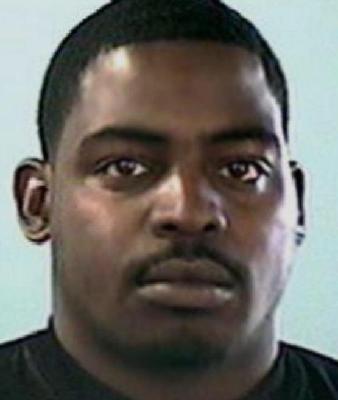
Allen F. Gage was a 38-year-old white male gastroenterologist who, in January 1980, was staying in a Phoenix, Arizona hotel during what should have been a routine stretch of work and travel. On the night of January 24, 1980, a stranger came to his door presenting himself as hotel security, a figure who would not have seemed out of place in the quiet corridors. The man was Donald Eugene Harding, already in the middle of a violent, multistate crime spree that had taken him from Arkansas to California and now into Arizona. Once Gage allowed him inside, the encounter turned quickly from an apparent security check into a deadly assault. Harding overpowered the doctor, binding his wrists and ankles with tape he had taken from a medical colonoscopy kit in the room and forcing a sock deep into his mouth as a gag. With Gage rendered helpless on the floor, Harding rifled through the room, robbed him, and left him bound and face down, the gag blocking his airway until he suffocated. By the following day, January 25, 1980, Gage was discovered dead in his Phoenix hotel room, his murder soon linked to the same intruder who would kill again in Tucson.
Gage’s killing was not an isolated act but part of the Arizona chapter of Harding’s brief, intense series of robberies and murders spanning the winter of 1979–1980. Earlier that month, Harding had already bound and gagged a man in a South Lake Tahoe hotel and committed additional murders and robberies as he moved south and east, repeatedly using restraints and gags to overpower his victims. In Phoenix, he followed the same pattern: gain entry to a room under a false pretense, immobilize and silence the occupant, rob him, and move on in a stolen vehicle. After leaving Gage to die, Harding took the doctor’s wallet and car, using them as tools to continue his flight from one crime scene to the next. The Phoenix homicide quickly drew attention not only for the brutality of the manner of death—death by asphyxiation from the gag—but also because it appeared to match the method used in other recent unsolved crimes in the region and in neighboring states.
Within a day of Gage’s murder, Harding drove the stolen car to Tucson and posed again as a security officer, this time at a motel where businessman Robert Wise and his colleague Martin Concannon were meeting. Inside their room, he hogtied both men, beat Wise with a motel lamp, stuffed socks into Concannon’s mouth, and then shot them; medical examiners would later conclude that, like Gage, at least one of the Tucson victims ultimately died from suffocation caused by the gag rather than the gunshots alone. Harding abandoned Gage’s vehicle at the Tucson scene and fled in Concannon’s car, leaving behind a trail of physical evidence that connected the crimes: the same style of bindings, the same use of improvised gags, and the same progression from robbery to lethal violence. Arizona authorities quickly realized that the Phoenix and Tucson murders were linked, both by the modus operandi and by the stolen property and vehicles shuttling between the crime scenes.
Harding’s capture came only days later, far from the Phoenix hotel where Gage had died. Driving Concannon’s car into a reserved parking lot near the Skydome at Northern Arizona University in Flagstaff, he attracted the attention of a campus police officer who noticed the mismatch between the driver’s Southern accent and the car’s Ohio plates. When a records check revealed the vehicle was stolen and possibly tied to multiple homicides, officers followed and stopped the car. The arrest that followed yielded crucial evidence: a. 25-caliber pistol, multiple fake identification cards including ones identifying him as a security guard or special officer, and personal items belonging to his victims. Among those items were Gage’s wallet and identification, physically linking Harding to the Phoenix hotel room where the doctor had been bound, gagged, and left to die. From that point forward, there were no serious alternative suspects; the state’s case focused squarely on Harding as the sole perpetrator of the Phoenix murder and the Tucson double homicide.
Prosecutors elected to try Harding first for the Tucson murders, which provided a detailed public record of his methods and motives. In an April 1982 trial, jurors heard about his escape from an Arkansas jail, his string of robberies and kidnappings across several states, and the pattern of binding, gagging, and sometimes shooting his victims. Witnesses and law-enforcement officers testified about the stolen vehicles, the security-guard disguises, the threats Harding had made while in custody, and the forensic evidence tying him to the motel room where Wise and Concannon died. After about five hours of deliberation, the jury convicted him of two counts of first-degree murder, along with related robbery, kidnapping, and theft charges, and the court later imposed two death sentences plus lengthy consecutive prison terms for the non-capital offenses. In a subsequent proceeding, Harding received a third death sentence specifically for the murder of Allen F. Gage in Phoenix, the court finding that it too had been committed for financial gain and in a cruel and depraved manner, mirroring the Tucson crimes.
Over the next decade, Gage’s case and the others followed Harding through a long series of appeals and post-conviction challenges. His attorneys emphasized his history of organic brain damage, neurological problems, and institutionalization from childhood, arguing that these impairments diminished his control over violent impulses. Appellate courts, however, repeatedly upheld his convictions and sentences, finding that the Phoenix and Tucson murders were planned robberies that involved deliberate, repeated acts of restraint and suffocation. Harding remained on Arizona’s death row until April 6, 1992, when he was executed in the state’s gas chamber, an event that drew both protest and national attention because of the length and apparent agony of the procedure and that helped accelerate Arizona’s shift toward lethal injection for future executions. With his death, the state closed the file on the murder of Allen F. Gage: a physician attacked in his hotel room by a man he had never met, whose brief encounter with a stranger posing as security ended in robbery, suffocation, and, ultimately, a capital case that would echo through Arizona’s debates over punishment and justice for years to come.