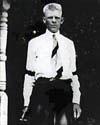
Michael Angel Rosa, a 29-year-old Hispanic/Latino man, was an undercover narcotics officer in Rock Springs, Wyoming, a boomtown whose sudden wealth had been shadowed by allegations of vice, corruption, and political protection. By the summer of 1978, Rosa had become part of that dangerous hidden world, working inside a police department and a city already under intense scrutiny.
Online historical accounts describe him as a Marine veteran and a relatively new member of the Rock Springs Police Department who had been operating undercover for only months when his life was cut short in the early hours of July 15, 1978. He was killed in or beside an unmarked police vehicle outside the Silver Dollar Bar, shot at close range in a case that would become one of the most infamous killings in modern Wyoming history.
What made Rosa's death reverberate far beyond Rock Springs was the identity of the man accused of killing him and the cloud hanging over the city at the time. The principal suspect was Edward Lee Cantrell, the city's public safety director, who according to multiple online sources shot Rosa during a heated confrontation while other officers were present in the vehicle. One version that circulated afterward cast the shooting as self-defense, but other reports said Rosa was on the verge of testifying before a state grand jury about corruption he had witnessed in Rock Springs. That timing gave the killing an almost fatalistic air in later retellings: a young undercover officer moving through a town full of secrets, only to die just before he might have spoken in a more public forum. The case was investigated by the Wyoming Division of Criminal Investigation, and the person believed responsible was charged with murder. A lengthy preliminary hearing followed, and a Sweetwater County justice of the peace found probable cause to move the case forward on a first-degree murder charge.
The legal aftermath only deepened the sense of mystery and division around Rosa's death. Cantrell stood trial for first-degree murder after what sources describe as an unusually long preliminary hearing, with the case eventually tried after a change of venue. He was represented by famed Wyoming lawyer Gerry Spence, and the defense persuaded jurors that Cantrell had acted in self-defense. After only a short period of deliberation, the jury returned a not-guilty verdict, leaving the killing officially unresolved in the eyes of many observers even though the shooter's identity had never truly been in doubt. Later accounts, legislative materials, and archival summaries continue to frame Rosa's death as a murder for which a suspect was charged and tried but ultimately acquitted. His widow later pursued civil litigation over the killing, extending the battle from the criminal courtroom into the federal courts, but the criminal case itself ended without a conviction. In the years since, Rosa's name has remained bound to the larger story of Rock Springs in the late 1970s: a city swollen by the energy boom, riddled with scandal, and marked forever by the death of an undercover officer whose story still feels like a noir tragedy played out on the high plains.