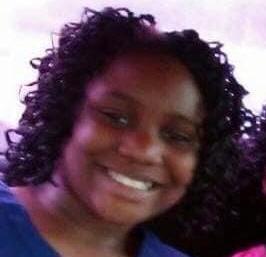
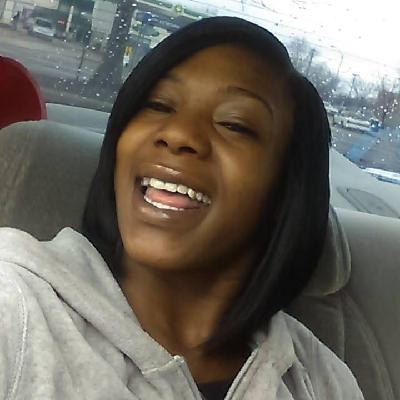
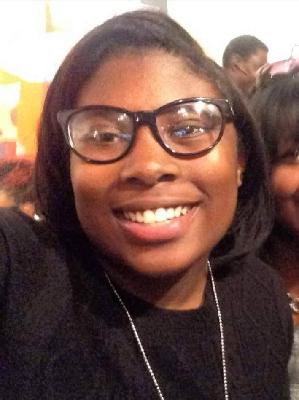
Jasmine McKinney was 17, a Black female from St. Louis, Missouri, still at the age where a night ride in a car could feel like a small slice of freedom—music, chatter, the glow of streetlights sliding across the windows—until everything shattered in an instant. Late on November 20, 2007, the vehicle she was riding in moved through the intersection of Potomac Street and Oregon Avenue, an ordinary corner of the city that suddenly became the setting for something senseless.
Police said a man standing near another car opened fire as the SUV passed by, the gunshots tearing through the rear windshield and striking Jasmine in the head.
In the moment after the shots, there wasn’t time for understanding—only shock, adrenaline, and the desperate instinct to get away from danger. The driver didn’t stop at the intersection. He kept going, pushing the vehicle forward as if speed could outrun what had just happened. With Jasmine gravely wounded, he headed straight to a Schnucks grocery store parking lot at South Grand Boulevard and Gravois Avenue, searching for help in the nearest place where someone might be able to intervene. There, he flagged down a police officer, the kind of frantic plea that needs no explanation—the kind that says everything without words.
The front of the car held survivors. Police said the driver and the other passenger in the front seat were not injured, a detail that can feel almost cruel in its contrast: life continuing in the same breath that another life is slipping away. Jasmine was rushed to the hospital, but the injury was catastrophic. She was pronounced dead at 10:32 p.m., a precise time that reads like a cold fact on paper but, in reality, marks a permanent dividing line for everyone who loved her—before that minute, there was still hope; after it, there was only grief and the awful quiet that follows news no one is ever ready to hear.
As detectives tried to piece together what happened, the night itself seemed to be bleeding violence. Investigators also looked into another shooting around the same time near Texas Avenue and Utah Street, where a 26-year-old man was critically wounded. Whether connected or simply part of a brutal pattern unfolding across the city that evening, the overlap deepened the sense of chaos—multiple scenes, multiple victims, and the same haunting question: who was pulling the trigger, and why?
What stands out most painfully is the emptiness where certainty should be. At the time police described the case, no suspects were in custody. No names were publicly attached to the shooting in those early accounts, no arrests announced, no charges filed, no courtroom resolution to offer a family the smallest measure of answers. Instead, what remained was the image of a teenager caught in sudden gunfire as a vehicle passed by—an attack that sounded like it was over in seconds, but left consequences that would stretch on indefinitely.
Jasmine’s death reads like a tragedy built from quick, irreversible moments: a man near a car, a burst of shots, glass exploding, a driver making a split-second decision to flee and find help, the glare of parking-lot lights at a grocery store, the arrival of police, the rush to the hospital, and then the final pronouncement. And after that, the long aftermath—questions that linger, memories that ache, and the heavy truth that a young life was taken on a random corner of St. Louis in the middle of an ordinary night, leaving behind a story that never should have existed.