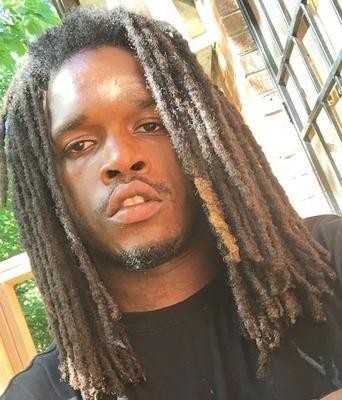
In the early hours of December 27, 2015, Terry D. Stewart, a 30-year-old man from Nashville, Tennessee, was outside the Buena Vista Pike apartment complex where he lived when the night fractured into gunfire. Police were called to the 2400 block of Buena Vista Pike around 1:30 a.m. after reports of shots fired, and witnesses later described Stewart as having been among a small group of people shortly before the shooting, with one man allegedly “showing off” a pistol in the moments leading up to the blasts. When officers reached the complex, they found Stewart on the ground with a gunshot wound and rushed him to Vanderbilt University Medical Center, where he later died.
As patrol officers converged, one responding officer testified that a 911 hang-up call traced back to the complex and that, within minutes, he saw two vehicles accelerating out of the apartments as he arrived. Inside the complex, officers found Stewart heavily bleeding and slumped near the front stairs to an apartment unit; attempts to get a name or description of the shooter from him failed because he was unable to speak. Crime scene technicians documented two key areas: the porch/parking-lot area where Stewart was discovered and a playground area nearby. Investigators collected a spent projectile, Stewart’s clothing and cell phone, and seven cartridge casings from the secondary area. The autopsy later detailed a fatal wound with an entry at the left buttock that fractured the pelvis and tore through abdominal organs before exiting the body, underscoring how a single shot could be catastrophic even without multiple visible wounds.
In the immediate scramble to identify who fired the shots, police had no publicly named suspect at first, but they quickly began tracking people who might have fled the area. About half an hour after the shooting, two men were stopped for a traffic violation and interviewed, remaining “under investigation” at that time. Not long after, another stop became central to the case: around 1:45 a.m., an officer pulled over a white Buick for running a red light and, with the driver’s consent, searched the vehicle. In the glove box he found a loaded Glock handgun and ammunition. The front-seat passenger was Javarius Deshawn Baugh, and the officer later described him as agitated and visibly uncomfortable as the search unfolded, repeatedly protesting that the officer had no right to look through the car. Because both men were convicted felons, both were arrested for unlawful possession of a firearm. The driver, Rodricous Garrett, later testified that he had heard gunshots at the apartments, waited briefly, and then agreed to give Baugh a ride away from the scene—saying Baugh asked to get out of the area after the shooting and, during a phone call, indicated he needed to “lay low.”
From there, the investigation tightened into a story told through surveillance angles, forensic comparisons, and the fragments people leave behind when they run. Detectives reviewed apartment-complex surveillance footage that captured a figure coming from the back of the complex and firing a gun around 1:23 a.m., then a figure running from the playground area toward the location where Stewart was found. A detective testified that the shooter in the footage appeared to be wearing an orange hat and a medium-toned shirt, and police later photographed Baugh in similar clothing at the precinct. Digital forensics on phones associated with Baugh uncovered photographs and stored videos showing him holding a black semiautomatic handgun that investigators said appeared consistent with the weapon recovered from the Buick’s glove box. A firearms examiner testified that the seven Winchester cartridge casings collected at the scene were fired from the Glock model 20 submitted for analysis. Even without fingerprints or DNA tying Baugh to the gun or ammunition, prosecutors built the narrative around timing, proximity, the recovered weapon, the surveillance imagery, and the testimony that placed him at the complex minutes after the shots.
Baugh was ultimately indicted and prosecuted for Stewart’s killing. News reports later stated that investigators indicted the 21-year-old for murder in connection with the shooting outside the Buena Vista Pike apartments. The case proceeded to a jury trial in late February 2019, where Baugh faced charges of first-degree premeditated murder and unlawful possession of a firearm by a convicted felon. The jury convicted him on both counts, and he received an effective sentence of life imprisonment. On appeal, Baugh argued the evidence did not prove he was the shooter, pointing to the lack of DNA or fingerprints and challenging witness credibility and the weapon identification. The Court of Criminal Appeals of Tennessee affirmed the convictions, concluding that the evidence—viewed in the light most favorable to the prosecution—was sufficient to establish his identity as the man who shot and killed Stewart with the recovered handgun.