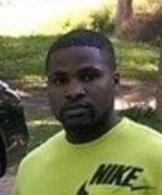
Late in the morning on June 7, 2016, a quiet stretch of Bessie Avenue in North Nashville cracked open with rapid gunfire, the kind that sends people diving to the floor before they even understand what they’re hearing. When the shots finally stopped, Kemontanez “KD” Armstrong, a 22-year-old African American man, lay wounded outside a home, while his stepfather, Keon Hawkins, was already dead at the scene.
Investigators pieced together a tense, ordinary start to the day that turned sudden and violent. Hawkins had shown up earlier that morning at a friend’s house on Bessie Avenue, and Armstrong arrived later. Within minutes, bullets were ripping through the neighborhood—so many that at least one nearby home was struck as people inside scrambled for cover. Witnesses reported that as Hawkins and Armstrong stepped outside, gunfire erupted and a man in dark clothing fled up the street. Hawkins was found on the ground with a handgun in his hand; Armstrong, gravely injured, was rushed to Vanderbilt University Medical Center, where he died.
In the first blur of the investigation, police described the attack as targeted rather than random, and witnesses spoke of one suspect—possibly two—opening fire and running off. Days later, Metro police identified James Lee Simpson as the suspect and obtained arrest warrants charging him with two counts of criminal homicide. Police said Simpson turned up at St. Thomas–Midtown Hospital about an hour after the shooting with a gunshot wound to his right arm, and reported ballistics evidence tied him to the scene. On June 25, 2016, Simpson surrendered at police headquarters and was booked into the Metro jail.
The case moved through the courts in stages, reflecting how complicated the state believed the shooting was. A grand jury first returned an indictment in December 2016 that included felony-murder counts for both deaths, along with aggravated-assault charges and a felon-in-possession charge; a later, superseding indictment in August 2018 alleged first-degree premeditated murder for both Hawkins and Armstrong. At trial, testimony described the moments before the shots as both abrupt and chaotic, and the defense pressed a version of events that cast Armstrong as the initial aggressor in a confrontation on the street. The jury’s verdict ultimately split the story: it acquitted Simpson on the counts tied to Hawkins, but convicted him of voluntary manslaughter and aggravated assault resulting in death in Armstrong’s case, and also convicted him of being a felon in possession of a firearm. The trial court imposed an effective fifteen-year sentence.
Years later, the legal aftermath took another turn. In an appellate decision filed October 31, 2022, the Tennessee Court of Criminal Appeals reversed Simpson’s convictions and sent the case back for a new trial, concluding that errors at trial required the convictions to be undone and the case retried. Meanwhile, Armstrong’s loved ones had already been forced to begin mourning in real time: his obituary remembered him as “KD,” listed his surviving family, and announced a public viewing and funeral service held at St. John AME Church in mid-June 2016—rites that, for those closest to him, followed far too quickly after the gunfire on Bessie Avenue.