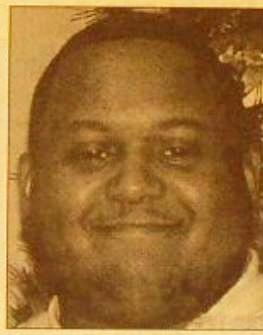
Marlon Johnson, a 23-year-old male from Chester, Pennsylvania, died on October 26, 2001, in a killing that left behind more questions, grief, and anger than answers. What began as a confrontation that may have been expected to end in a fight instead became something permanent and devastating. Marlon was a young man with a life still unfolding, someone connected to his community, someone with people who knew him, loved him, and would have to carry the pain of what happened long after the
violence was over.
On that day, Marlon was reportedly not part of the original group involved in the tension that led to the confrontation. The account available says that Gemere Carroll, Carroll’s brother, and several other boys from the Sun Village area had been together earlier, while Marlon was simply returning home. He noticed friends in the park and, without fully knowing what was going on, became drawn into the situation. What may have looked at first like a dispute between young men, or a planned fight, carried a danger that Marlon may not have understood until it was too late.
The confrontation was said to have been set for Sun Village Park around 1 p.m. It was described as a “brawl,” the kind of word that suggests fists, anger, shouting, and bruises, but not necessarily a funeral. But someone brought a gun, and once that weapon entered the moment, everything changed. Marlon was reportedly shot in the face. Then, according to the same account, after he was already down, he was shot two more times in the chest. Those details make the killing especially painful to imagine, because they suggest not only a sudden burst of violence, but an act that continued even after Marlon had already been gravely wounded.
In the aftermath, the explanation reportedly offered was that Gemere Carroll had been “forced to shoot the man.” But that claim was sharply rejected by someone who wrote publicly about the case, questioning how a person could be forced to shoot when he had chosen to bring a gun to what was supposedly a fight. The writer’s words carried the hurt of someone struggling to understand how Marlon could be gone and how anyone could justify what happened. The questions were direct and heartbreaking: why bring a gun at all, and why shoot again if Marlon was already on the ground?
Marlon’s death was not just another act of violence in Chester. It was the ending of a young life and the beginning of a long ache for those left behind. At 23, he should have still had years ahead of him to grow, make mistakes, find his way, laugh with friends, and be with the people who cared about him. Instead, his name became tied to a moment of violence in a park, a confrontation that escalated beyond anything that should have happened. The people who mourned him were left not only with loss, but with the painful knowledge that his death may have come from a situation he did not start and may not have fully understood when he first came upon it.
The public information available names Gemere Carroll in connection with the shooting, but it does not provide confirmed details of an arrest, criminal charges, trial, conviction, or sentencing. No clear online record has been identified showing whether anyone was formally punished for Marlon Johnson’s death. That absence leaves a painful gap in the story. For the people who loved Marlon, the lack of a clear public legal outcome likely adds another layer of hurt, because losing someone violently is already unbearable, and not knowing whether justice was ever fully carried out can make the loss feel even more unresolved.
What remains is the story of a young man from Chester whose life ended violently on October 26, 2001, after a confrontation that should never have turned deadly. Marlon Johnson’s death stands as a reminder of how quickly anger, pride, and weapons can destroy a life, a family, and a community. A fight can end. Harsh words can fade. Bruises can heal. But a gunshot cannot be taken back, and Marlon’s loved ones were left with the permanent reality of his absence. His story is one of a life cut short, of grief that demanded answers, and of a community left to reckon with the cost of violence that never should have happened.