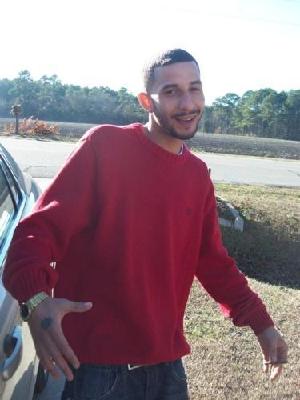
Aaron Coty Lowry, a 30-year-old male, was in Williamsport, Pennsylvania, for work when he was killed in the early morning hours of June 1, 2014. He was from Maxton, North Carolina, and online reports described him as a Robeson County construction worker and subcontractor who had traveled north for a YMCA construction job. Family members said he went by Coty, had a longtime girlfriend, Cekina Locklear, and was the father of two young daughters.
The shooting happened outside the Lamphouse Hookah Bar on West Third Street in Williamsport. According to authorities cited in news reports, Rashawn Jeffrey Williams, a Philadelphia man, came to the lounge upset because he believed his girlfriend had been flirting with a group of North Carolina workers. When Williams and the woman came outside, Lowry reportedly stepped in because he thought he was witnessing a domestic assault. In that moment, what began as an argument outside the lounge turned deadly. Williams shot Lowry in the chest at close range. Lowry was taken to Williamsport Regional Medical Center, where he died from a single gunshot wound.
Lowry’s relatives later described his actions as consistent with who he was. They said he did not tolerate violence against women and believed he was trying to protect someone. His family also said he had only recently left home for the job in Pennsylvania and had planned to marry his longtime girlfriend when he returned from that trip. The case was remembered not only as a bar shooting, but as the death of a man who appeared to have intervened in a volatile domestic situation and paid for it with his life.
Police quickly identified Rashawn Jeffrey Williams as the suspect. After the shooting, Williams fled Pennsylvania and went to North Carolina. Williamsport police contacted the U.S. Marshals Service, and investigators developed information that he was in High Point, North Carolina. On June 6, 2014, U.S. Marshals and local police located him there. When officers moved in, Williams tried to escape by jumping out of a window and running. A police K9 was deployed, and Williams was captured after a brief struggle. He was charged with criminal homicide, two counts of aggravated assault, firearms violations, and additional offenses tied to Lowry’s death.
The case later went to trial in Lycoming County. Prosecutors argued that Williams brought a gun into a fistfight and used deadly force in a way that showed an extreme disregard for human life. The defense claimed Williams acted in self-defense, saying Lowry and others had attacked him from behind and that Williams fired because he was being beaten. There was also trial testimony and argument involving a folded pocketknife found in Lowry’s pocket, but prosecutors disputed the defense version and pointed to Williams fleeing and allegedly fabricating parts of the story as evidence against self-defense.
After a six-day homicide trial, a jury found Rashawn J. Williams guilty of first-degree murder and related charges. On May 5, 2016, he was sentenced to life in state prison without the possibility of parole for first-degree murder. He was also sentenced on other charges, including aggravated assault, possession of a firearm without a license, person not to possess a firearm, simple assault, resisting arrest, terroristic threats, and flight to avoid apprehension. Prosecutors also noted Williams’ prior violent record, including a 2000 aggravated assault conviction connected to a shooting in Philadelphia and a 2009 robbery conviction tied to an armed home invasion.
Williams appealed after his conviction, but the judgment of sentence was affirmed. Court records described the killing as Williams shooting Lowry outside the hookah lounge and then fleeing to High Point, North Carolina. Later post-conviction challenges also did not undo the conviction or life sentence.
Another person, Erica Lambert, Williams’ girlfriend, was prosecuted for helping him after the shooting. She was accused of transporting Williams from Pennsylvania toward North Carolina and later giving police false information by claiming her vehicle had been stolen and that she had not had contact with Williams after the early morning of June 1. A judge found Lambert guilty in 2016 of two counts of hindering apprehension or prosecution and one count of false reports to law enforcement. She was sentenced to six months to two years minus one day in jail, followed by two years of probation, with the false reports count merging for sentencing purposes.