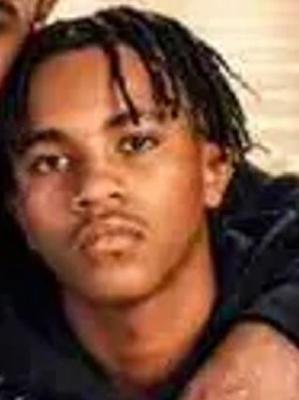
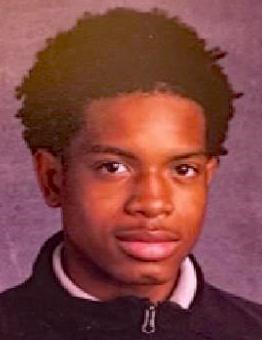
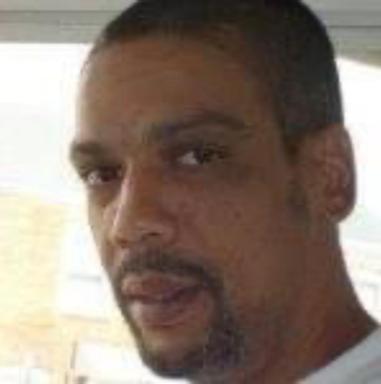
A-Quan LaMarr Kemper, a 23-year-old Black/African American male from Harrisburg, Pennsylvania, died on January 9, 2015, after he was shot inside a home on South 16th Street. He was a young man whose life was still unfolding, a son, a father, a brother, a grandson, and a friend whose story did not begin or end with the violence that took him. Those who knew and loved him remembered him as quiet, funny, and full of personality, someone with a sense of humor that stayed with people and a curiosity about the world around him. He enjoyed animals, computers, and learning from programs on channels like History Channel and Animal Planet. He was still only in his early twenties, still connected to family, still tied to the city where he had grown up, and still had a daughter who would have to grow up carrying the absence of her father.
On January 9, 2015, what should have been an ordinary Friday in Harrisburg turned into the first homicide of the year for the city. The shooting happened shortly before 5:00 p.m. inside a residence reported as being on the first block of South 16th Street, including accounts identifying the location as 25 South 16th Street. When Harrisburg police arrived, they found A-Quan dead at the scene. He had suffered a single gunshot wound to the upper torso, later described in another account as a gunshot wound to the chest. The details made the loss feel even more devastating: this was not a distant or anonymous act of violence on a street corner, but a fatal shooting inside a home, in a place where people were present and where A-Quan should not have been left to die.
Police said early on that the shooting did not appear to be random. Investigators believed A-Quan likely knew the person who killed him, and the incident was described as isolated. Other people were reportedly inside the house when the shooting happened, and police said they were interviewing several individuals as part of the investigation. Yet even with people present, even with investigators believing the shooter was someone connected to A-Quan in some way, the case did not quickly move toward the kind of answers his family deserved. Instead, his death became another painful entry in Harrisburg’s list of unsolved homicides, leaving behind grief, unanswered questions, and the heavy silence that follows when no one is held responsible.
Later reporting added even more heartbreaking context to what happened inside that home. A-Quan was described as having been shot in the kitchen of a friend’s house while the home was filled with people. After the gunshot, the scene reportedly descended into chaos. Some people fled. Others reportedly tried to get rid of drug evidence. Someone was even said to have stolen A-Quan’s cash while he lay dying on the floor. Those details make the tragedy feel especially cruel, because in the moments when A-Quan needed help, dignity, and protection, the people around him were described as scattering, hiding evidence, or taking from him. For his loved ones, that image must have been almost impossible to bear: not only that he was killed, but that the aftermath of his final moments was marked by panic, selfishness, and silence.
A-Quan’s mother, Michelle Kemper, was later shown holding a picture of her son as families of Harrisburg homicide victims continued to wait for justice. That image speaks to the lasting pain left behind by cases like his. A homicide does not end when the crime scene tape is removed or when the news stories stop being published. For a mother, it continues every day in the empty space where her child should be. For a daughter, it continues in birthdays, milestones, questions, and memories she may have been too young to fully form. For siblings, relatives, and friends, it continues in the ache of knowing someone they loved was taken suddenly and violently, with no clear public answer about who pulled the trigger or why.
No publicly available information identified a named suspect in A-Quan Kemper’s killing. No arrest was reported in the sources reviewed, and there were no public reports of charges, a trial, a conviction, sentencing, or punishment connected to his death. The available information indicates that his case remained unsolved years after the shooting. That absence of accountability is one of the most painful parts of the story. A-Quan’s life had value, and his death left real people grieving, but the public record does not show that anyone was ever made to answer for what happened inside that Harrisburg home on January 9, 2015.
A-Quan Kemper’s story is ultimately the story of a young life interrupted and a family left waiting. He was remembered as someone with humor, interests, relationships, and a future that should have stretched far beyond 23 years. His death became part of a broader pattern of families in Harrisburg pleading for answers in unsolved homicides, but to those who loved him, he was never just a case number or a statistic. He was A-Quan: a son who was mourned, a father whose child lost him far too soon, and a young man whose final moments still call out for truth, accountability, and justice.