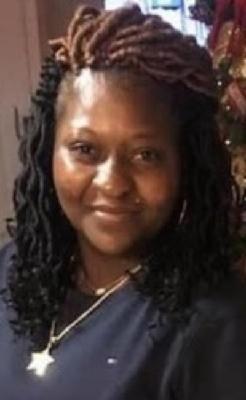
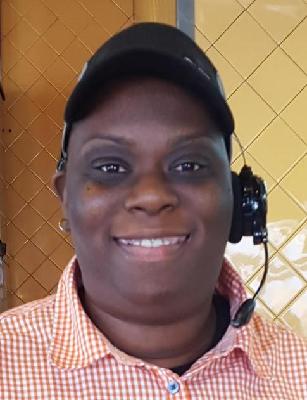
Donna Marie Wilson died on December 21, 2007, in Baton Rouge, Louisiana. She was a Black woman. Her death landed in that raw stretch of the calendar where the world insists on celebration while a family is suddenly forced to learn how to breathe through shock. With Christmas only days away, there would have been plans in motion—gifts, meals, phone calls, ordinary routines—until everything was split into a before and after, and her name became the one everyone said more softly.
In the
wake of her death, what stands out most is the life behind the headlines people might have expected, because what remains in the information available is not a public trail of suspects or courtroom testimony, but the imprint of a person who mattered to many. Donna was someone’s daughter, someone’s mother, someone’s relative and friend, and those relationships became the center of the story once she was gone. For the people who loved her, the details that mattered weren’t only the date and the place—though those are burned into memory—they were the small truths that don’t appear neatly in public summaries: the sound of her voice, the way she laughed, the roles she played in the lives around her, the plans she never got to finish.
Her death drew family together under the harshest circumstances, when grief turns even the simplest decisions into something heavy. There were arrangements to make, calls to place, and relatives to notify—each conversation repeating the same unreal sentence until it began to feel like it belonged to someone else’s life. When a loss happens at the end of the year, it can feel as if time itself is being cruel, as if the season is insisting on brightness while the home it touches has gone dim. The days after December 21 would have moved forward anyway, but for those closest to her, the clock would have stopped and started in strange ways, marking everything by what had already happened.
No information provided here identifies any arrest, suspect, or prosecution connected to her death. That absence is its own kind of ache, because it leaves the story without the kind of closure people often reach for when tragedy strikes. Instead, what remains is the simplest, most painful certainty: Donna Marie Wilson’s life ended on that December day in Baton Rouge, and a circle of loved ones had to carry the weight of her absence into every holiday that followed.
In the years after, the meaning of her name would be kept alive in the ways families do it—speaking of her in conversation, holding onto photographs, recalling her during birthdays and gatherings, and feeling the quiet impact of an empty space where her presence should have been. Even when time moves on, grief has a way of returning in waves: in the middle of a song, in a familiar street, in the sudden memory of something that once seemed ordinary. For those who knew Donna, December 21 will never be just another date on a calendar. It is the day the world changed, and the day they began the long, unchosen work of remembering her and missing her at the same time.