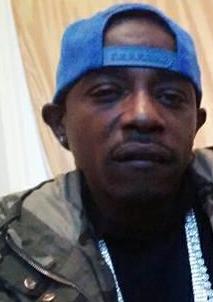
Mitchell C. “Putha” Ricard IV was a 20-year-old Black man from New Orleans, Louisiana, who died on September 24, 2010. The date sits there on the page like a door that slammed shut too soon, marking the moment a young life ended before it had the chance to fully unfold. He was male, and he was only twenty, an age when so much is still supposed to be ahead—plans still forming, hopes still being spoken out loud, and a future that hasn’t yet had time to harden into something certain.
What remains clearest is the shape of who he was to the people who loved him. Mitchell was a father. His child, My’La Sterling Ricard, is part of his story in the most enduring way, because when a parent is taken early, the loss isn’t only felt in the present—it stretches forward into birthdays, school days, and quiet milestones where someone should have been there. In that way, his death didn’t only take him from the world; it changed the world for his daughter, leaving her to grow with a missing space that can never truly be filled.
He was also a son, held in the love and worry of his parents, Mitchell Ricard III and Aretha Miller. No matter how old a child becomes, a parent never stops seeing them as the person they once carried, once watched stumble and rise again, once believed would make it safely into tomorrow. The grief of losing him would have come like a wave that knocks the breath out of you—one moment normal life, the next moment a phone call, a knock at the door, a sentence that doesn’t feel real. After that, time splits into before and after, and everything familiar begins to feel slightly unfamiliar, as if the world is insisting on continuing when it should have stopped to honor what was taken.
Mitchell’s life was threaded through a larger family, the kind of family that makes a community feel like a living thing. He was surrounded by siblings, grandparents, and relatives who carried his name in their mouths and his presence in their memories. Those bonds matter because they tell you he wasn’t alone in the world—he was claimed, known, and loved. He was part of a network of people who could point to a moment and say, that was him, that was his laugh, that was the way he walked into a room, that was the way he showed up when it counted. And when someone like that is gone, it isn’t just one relationship that breaks; it’s a hundred small daily rhythms that are suddenly missing their beat.
In early October of that year, people gathered to say goodbye in Algiers. There was visitation and a funeral service at Second Baptist Church, a place that would have held the heavy hush of mourning and the quiet courage it takes to stand up and speak a loved one’s name in the past tense. Churches like that become a shelter in moments like these—where grief is shared instead of carried alone, where tears don’t need explaining, where hands reach out without being asked. Afterward, he was laid to rest at Dobard Cemetery in Jesuit Bend, the final movement in a journey no one wanted him to take. For those left behind, that day would have been a blur of embraces and prayers, and then the unbearable stillness of realizing that after the ceremony ends, the grieving continues.
The public record of what happened around his death is limited, and it leaves unanswered spaces where the heart naturally reaches for certainty. There are no clear, publicly available details here about arrests, suspects, or prosecutions tied to Mitchell’s death—no definitive account of someone being taken into custody, no public courtroom ending that could be pointed to as justice. Instead, what stands out most is the human cost: a young man gone, a child left without her father, parents and family members forced to carry the impossible weight of a life cut short. In cases like this, the absence of clear answers can feel like a second loss—an ongoing ache that keeps reopening, because closure can’t be found when the story ends in silence.
And yet, even when the details fade or remain out of reach, the person does not. Mitchell Ricard’s name endures because the people who loved him carried it forward—into funeral programs, into conversations, into memories repeated so often they become a kind of prayer. He is remembered as more than a date and more than the way he died. He is remembered in the relationships he held, the family that gathered for him, and the daughter who will always have his blood in her veins and his absence in her life. His story, as it can be told from what is known here, is ultimately the story of a life that mattered—and of a loss that never stops mattering to those who had to learn how to live without him.