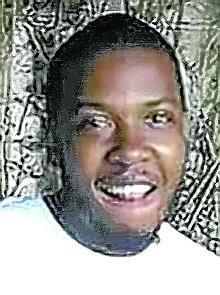
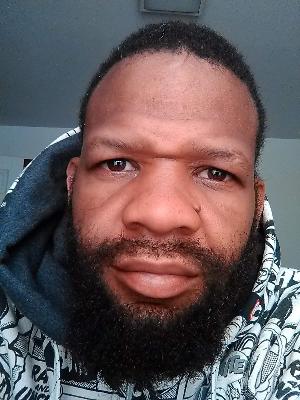
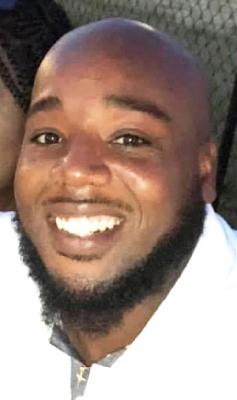
Cody Martin was 20 years old when his life ended on June 28, 2018, in New Orleans, Louisiana. He was a White man.
There are some names that feel like they should still be moving through ordinary days, still laughing at something small, still showing up for the people who love them. Cody’s is one of those names. Twenty is an age that still carries so much unfinished promise, the kind that sits quietly in the background of everyday life—plans that haven’t been spoken out loud yet,
messages that haven’t been sent, apologies that never needed to be made, and dreams that are still forming. When someone dies that young, it doesn’t just stop a heartbeat. It interrupts a whole story mid-sentence, leaving family and friends holding a silence that doesn’t make sense.
On June 28, 2018, Cody died in New Orleans. The date itself is simple and final, but what follows it is anything but. A death becomes a dividing line: everything before, and everything after. Before, there is the person as they were—known in familiar moments, remembered by their voice, their habits, their quirks, the way they looked when they were tired or excited or thinking. After, there is the ache of absence, and the exhausting, relentless process of learning how to live with something that cannot be fixed. The city around you keeps moving, traffic still flows, people still go to work, the sun still rises, and yet for the people who loved him, time becomes fractured. There are hours that blur together and nights that seem too long, and the mind circles back again and again to the same impossible truth: he should still be here.
When a young person dies suddenly, the grief often comes in waves, and the waves don’t follow rules. Sometimes the pain arrives as a sharp, immediate stab—an image, a memory, a song, a familiar street—and sometimes it settles into a heavy quiet that sits in the chest and refuses to lift. It can be hardest in the ordinary places: a chair at the table that feels wrong when it’s empty, a holiday that arrives and can’t be celebrated the same way, a birthday that becomes a reminder instead of a milestone. Even years later, loss like this can still ambush people without warning. The world may call it “moving on,” but what it often really is, is learning to carry the weight without dropping it.
Cody’s death belongs to that sad category of violence that can leave families not only grieving, but also searching—searching for answers, for accountability, for a sense that what happened mattered enough to be fully explained. And when the details are scarce, when the story isn’t publicly filled in, the unknown becomes its own kind of torment. The questions don’t simply fade. They echo. Who was with him? What happened in the moments that led up to it? Was it sudden, was it avoidable, did he know what was coming? Every unanswered question becomes a new place for the mind to get stuck, replaying imagined scenes, trying to create clarity out of fragments.
For those left behind, the loss of Cody Martin is not just a headline or a date. It is a missing presence. It is a name spoken softly, sometimes in private, sometimes at gatherings where people try to smile through tears. It is the memory of a young man who mattered deeply to someone—likely to many—because nobody is mourned like that unless they were loved. A life does not have to be famous to be significant. Cody’s life mattered because he existed, because he was known, because he was connected to others in ways that changed them, and because his absence reshaped the landscape of their lives.
There is a particular cruelty in losing someone at twenty. It’s the age when life is still taking shape, when a person is still becoming who they will be. It’s the age of hard lessons and hopeful leaps, of thinking you have time for everything, of believing that tomorrow is promised. When tomorrow is stolen, the people who remain often have to wrestle with grief and with the anger that comes with it—anger at the unfairness, anger at the circumstances, anger at the fact that it happened at all. That anger is a form of love, too, because it is rooted in the belief that he deserved better, that he should have had more time.
And yet, even in the ache, there is something else that persists: remembrance. The most enduring answer to loss is the refusal to let a person be reduced to the way they died. Cody Martin was more than his final day. He was a whole human being with a life that existed in ordinary moments—moments that were real and meaningful to the people who shared them with him. He was someone’s friend, someone’s family, someone’s “remember when,” someone’s laugh in the middle of a hard week. The pain of his absence is proof of the space he filled while he was here.
June 28, 2018, will always be a day that stings for those who loved him. But Cody’s story doesn’t end with that date. It continues in the hearts that still carry him, in the memories that still surface unexpectedly, and in the quiet determination of people who refuse to forget. In the end, what remains is both heartbreaking and beautiful: that even when a life is cut short, love does not disappear with it. It stays. It changes shape. It becomes remembrance, and longing, and the tender, stubborn hope that Cody Martin will always be known for more than the moment he was taken.