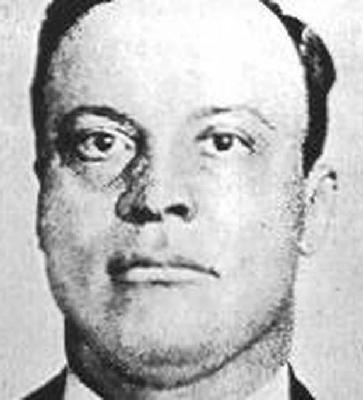
Peter Goosey Gusenberg, a 40-year-old German-American gangster, was killed on February 14, 1929, during the infamous Saint Valentine's Day Massacre in Chicago, Illinois. Gusenberg was a member of the North Side Gang, which was engaged in a violent conflict with Al Capone's Chicago Outfit. On that fateful day, Gusenberg and six other members of his gang were lined up against a wall in a garage and shot by four men dressed as police officers.
The massacre was a brutal and pivotal event in the history of organized crime in Chicago.
The investigation into the massacre was extensive, but no one was ever arrested or convicted for the murders. The case remains one of the most notorious unsolved crimes in American history. Despite the lack of arrests, the massacre is widely believed to have been orchestrated by Al Capone's gang as a way to eliminate the leadership of the North Side Gang and assert dominance over the Chicago underworld.
The Saint Valentine's Day Massacre had significant legal and societal implications. It led to increased public outrage and pressure on law enforcement to crack down on organized crime. The event also contributed to the eventual downfall of Al Capone, who was later convicted of tax evasion and sentenced to prison. The massacre highlighted the brutal nature of gang warfare and the challenges faced by law enforcement in combating organized crime during the Prohibition era.
In summary, Peter Goosey Gusenberg's death was a result of the violent gang conflict between the North Side Gang and Al Capone's Chicago Outfit. The Saint Valentine's Day Massacre remains an unsolved crime, but it had a lasting impact on the fight against organized crime in the United States.