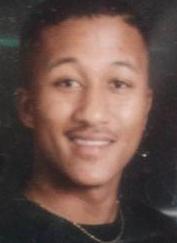
Roosevelt “Trey” Breaux III, a 21-year-old Black male, was killed by gun violence in Rome, Georgia, on August 1, 1999. The online record that survives about his death is strikingly sparse, leaving behind more of a shadow than a full public narrative. What does come through is the outline of a young man whose life was still in motion when it was cut short. Memorial information published online remembers him by the nickname Trey and places him firmly in the Rome community, with ties to Main Elementary and West Rome High School. He is also remembered by loved ones as funny, caring, full of life, and very much the kind of person whose absence would leave a loud silence behind.
Unlike some homicide cases that generate a long public paper trail of breaking news, court coverage, and appeals, Breaux’s death appears online mostly in memorial and victim listings rather than in detailed contemporary reporting that is easy to access now. Those records consistently show that he died in Rome on August 1, 1999, and that his death was the result of gun violence. Later family memorials also confirm that his death came years before the deaths of other relatives, preserving his place in the family story as someone mourned long afterward, not just in the immediate aftermath.
As for arrests, suspects, or prosecutions, the publicly available online sources are limited and do not provide a clear, well-documented account of who killed him or how far the case moved through the courts. In the accessible online material, there is no solid, fully traceable public record naming a suspect, laying out charges, or documenting a conviction in a way that can be confidently reconstructed from current web sources alone. That absence gives the case a haunting quality: a young man is clearly remembered, the fact of his violent death is not in doubt, yet the online trail grows faint when it reaches the questions people most want answered—who did it, whether anyone was arrested, and whether justice ever fully arrived.
What remains easiest to see now is not the machinery of the investigation, but the human outline of Roosevelt Breaux III himself. He is remembered not as a statistic first, but as Trey, a son and member of a family that continued to name him in later remembrances. The surviving online traces suggest a life that mattered deeply to the people around him, even if the public record of the crime itself has thinned with time. In that way, the story of his death is also the story of how some cases fade from broad view while grief does not.