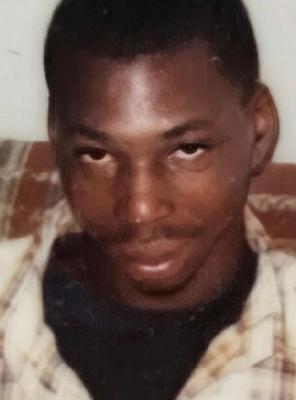
Jamario D. Evans, a Black male from Townsend, Georgia, died on April 10, 2017, after a shooting in McIntosh County, leaving behind a loss that still feels larger than the few public details that remain. The fragments of his story that can be found online point to a violent moment in the Crescent community near Eulonia, where what began as a card game reportedly spiraled into deadly gunfire.
In the space of a single night, an ordinary gathering became the dividing line between the life Jamario had been living and the grief that would follow for everyone who loved him.
What lingers most in cases like this is not only the violence itself, but the silence that follows it. The public record preserves the basic outline of what happened, yet it offers only a limited window into the man at the center of it. Even so, the picture that remains is deeply human. Jamario was not just a name in a death notice or another entry in a homicide record. He was someone whose absence would have been felt immediately and painfully by the people closest to him, the family members who had known his laugh, his habits, his struggles, his hopes, and the small details that never make it into public reporting. His death was not an abstract event. It was a wound carried by real people.
His obituary makes that heartbreak even clearer. It shows that when Jamario died, he left behind a daughter, along with parents, grandparents, siblings, and other loved ones who were forced to gather in mourning instead of celebration. That kind of loss ripples outward in ways no report can fully capture. A daughter grows up with memories interrupted. Parents are left with the unbearable reality of outliving their child. Brothers, sisters, and relatives carry forward birthdays, holidays, and ordinary days that no longer feel ordinary because someone is missing from them. Funeral services may bring people together to honor a life, but they do not answer the emptiness that follows after everyone goes home.
The public information surrounding the case suggests that the shooting grew out of a dispute during that gathering, a moment of anger or chaos that ended in irreversible tragedy. There is something especially painful about a death like that, because it appears to have emerged not from some long and distant chain of events, but from a sudden eruption in a place where people had come together. It is the kind of violence that reminds a community how quickly a night can turn, how fast words can become irreversible actions, and how one moment can echo for years.
As for accountability, the publicly available sources do not clearly identify a suspect, arrest, or final court resolution tied to Jamario Evans’s death. That lack of closure gives the case an especially haunting quality. For the people who loved him, grief would have been heavy enough on its own, but uncertainty has its own cruelty. When a life is taken and the public record does not clearly show who answered for it, the pain remains open in a different way. Questions linger. People are left to wonder what happened in full, who was responsible, and whether justice ever truly came.
In the end, Jamario’s story survives online in pieces, but the emotional truth is unmistakable. A man from Townsend was killed in April 2017, and those who cared for him were left to reckon with a loss that could never be reduced to a few lines in a report. His death stands as both a personal tragedy and a reminder of how fragile life can be when violence enters a community. Even where the public record is incomplete, the sorrow is easy to understand: Jamario Evans was here, he mattered, and his death left behind a silence that those closest to him would have carried long after the headlines and notices faded.