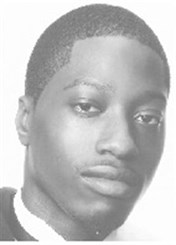
Denetri Mixson was an 18-year-old African American man from Jacksonville, Florida, better known in the city's rap scene as Lil N9ne, a rising artist whose gritty videos and melodic flows were just starting to circulate beyond his neighborhood when his life was cut short. He grew up on Jacksonville's Eastside and began rapping seriously in his mid-teens, putting out tracks like “SouthSide,” “Countryside Diss,” “Pressure ” and “Facts” on local YouTube channels, where he rapped in
hoodies and basketball jerseys with a small crew clustered around him. Behind the stage name was a son and brother that family described as loyal, funny, and protective; on online memorials his parents and relatives write about a kid who worked with his brother at a tree service, talked about becoming a firefighter, and still attended local schools while chasing a rap career.
On the afternoon of June 8, 2020, Mixson climbed into the passenger seat of a car headed east along Atlantic Boulevard in Jacksonville's Arlington neighborhood, a busy commercial strip lined with shops and steady traffic. Around 2:15 p.m., as the car moved through the corridor, another vehicle — described by witnesses as a black car — pulled alongside and a gunman opened fire, sending roughly a dozen rifle rounds crashing through the passenger side. One bullet struck Mixson while the driver, who was not hit, fought to keep control of the car as it careened off the road, clipping a canopy and a parked vehicle in front of a Rent-A-Wheel tire shop before coming to a stop amid broken glass and twisted metal.
People in nearby businesses heard a rapid series of loud shots and dropped to the floor; one witness later recalled seeing the wounded passenger stumble from the crashed car, collapse onto the pavement, and trying to help him until paramedics arrived. Police and Jacksonville Fire and Rescue units flooded the scene, blocking off Atlantic Boulevard with patrol cars and crime-scene tape as detectives from the Jacksonville Sheriff's Office Homicide Unit marked shell casings in the roadway — casings investigators said were consistent with a rifle-style weapon capable of sending bullets ricocheting far beyond the intended target. Mixson was rushed to a hospital but could not be saved, and his death was later recorded in the sheriff's homicide database as a murder.
In the days that followed, detectives interviewed the driver and multiple witnesses, gathered surveillance footage that showed a gray Dodge Challenger pulling into the parking lot as a dark car slowed nearby, and publicly appealed for anyone with information to come forward. Investigators emphasized that the shooting did not appear random, describing it as a targeted attack on the passenger, while the black car believed to have carried the shooter sped away westbound on Atlantic Boulevard and vanished into traffic before officers arrived. Despite the scrutiny, there have been no widely reported arrests in connection with Mixson's killing, and law-enforcement officials have not announced any suspects by name; local coverage of Jacksonville's rap feuds continues to speak of mothers “waiting for arrests, or trials, for their sons' murders,” a phrase that still encompasses his case.
Even as the investigation stalled in public view, Mixson's name refused to fade from Jacksonville's consciousness. In 2021, a diss track called “Who I Smoke,” built on Vanessa Carlton's pop hit “A Thousand Miles,” went viral after Jacksonville rapper Yungeen Ace and his collaborators chanted the names of three slain rivals — Bibby, Teki, and Lil Nine — as the hook, turning real murders into taunts that millions heard online. News stories and longform essays about the song traced the animosity between two loose camps of neighborhood crews and rap affiliates, often labeled ATK and KTA, and described how lyrics bragging about dead opponents, including Mixson, had become a national spectacle even as grieving families watched and listened from home. For his relatives, every new play of the track or repost of his image was another reminder that the person who fired into the car on Atlantic Boulevard was still out there.
Online, his memorial page has filled with pictures of him in Nike hoodies and Lakers jerseys, smiling into the camera, and with messages from parents, cousins, siblings, and friends who light digital candles and write about birthdays and holidays spent without him. They remember a student who once talked about fighting fires instead of getting caught in them, a rapper whose catalog was still only a handful of songs, and a young man whose life ended in the middle of the afternoon on a crowded street. For now, the story of Denetri Mixson remains suspended between those images of promise and the unanswered questions of a roadside ambush that turned a rising local artist into another unsolved homicide.