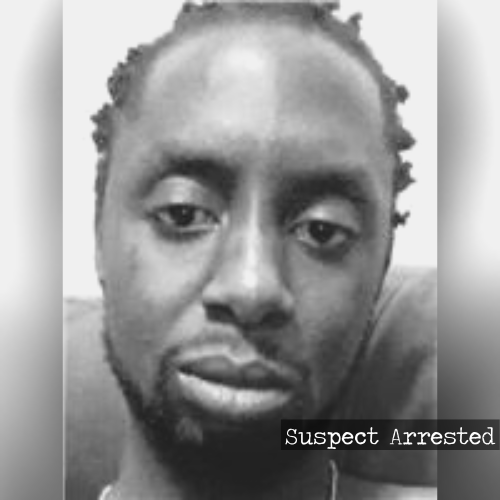
Do you know who killed Charles Paul? Charles Lee Paul, a 23-year-old Black man from New Orleans, Louisiana, died on July 4, 2014. In the wake of that day, the only firmly visible pieces left to the public are the ones families are forced to create when answers are scarce: announcements, arrangements, a path for loved ones to follow as they move through grief together.
New Orleans is a city that understands how to gather around its own, and the plans made for Charles reflect that.
A homegoing was scheduled for the morning of August 1, 2014, at the Charbonnet-Labat Funeral Home’s Family Center on St. Philip Street. The word homegoing carries a particular tenderness, suggesting that even when life ends too early, a person is still being carried somewhere safe—escorted by prayers, tears, and the steady presence of the people who refuse to let them be forgotten. From there, Charles was to be laid to rest at Holt Cemetery, a quiet place where time slows and families return again and again, leaving flowers, talking softly, and learning how to live with the shape of someone missing.
What happened to Charles in the moments or hours that led to his death is not clearly told in the limited information available. A public memorial entry notes that his death is recorded as a fatal gun-violence incident in New Orleans on the same date, but it offers no fuller account of where it occurred, what circumstances surrounded it, or who might be responsible. The public trail does not name a suspect. It does not describe an investigation in detail. It does not show the arc people hope for in a case like this—an arrest, charges filed, a courtroom reckoning, a conviction that at least answers the question of who did it. In the sources available, there are no confirmed arrests, no documented suspects, and no publicly described prosecutions tied to his death.
And that absence matters, because when the public record is thin, what remains is the emotional truth: a young man is gone, and the people who loved him were left to do the hardest work there is—turning shock into remembrance, turning pain into ritual, turning a brutal finality into a moment where his name is spoken out loud and held with care. The scheduled gathering at the funeral home, the procession to the cemetery, the choice to bring people together in a homegoing—these are not small details. They are the ways a family and community insist that Charles was more than a statistic, more than a date, more than a line in an entry. They are the proof that he was loved, that he belonged to people who will carry him forward in stories, in photographs, in the sudden silence that comes when a familiar voice is no longer there, and in the ongoing hope that truth and accountability will someday match the weight of what was taken.