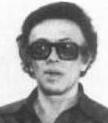
Gaetano Costa, a male Italian butcher and merchant, was working out of his shop at Thirty-second Street and Fourth Avenue in Brooklyn when an extortion demand—framed in the familiar menace of the Black Hand—came his way. The note insisted he hand over $1,000, hidden inside a loaf of bread, to a man who would step up like any ordinary customer and signal himself by pulling out a red handkerchief. Costa refused to be shepherded into that ritual.
He ignored the handkerchief, and in the small, everyday space of his butcher shop, the threat turned into gunfire.
Later accounts tied the killing to the atmosphere of fear that surrounded the Black Hand racket: crude symbols, blunt threats, and the expectation that people would pay quickly because they’d seen what happened when someone didn’t. One retelling says it was widely understood that the men behind Costa’s death worked for Ignazio “Lupo the Wolf” Lupo, yet the neighborhood code of silence held tight enough that, in that version of events, no one was ever charged at all—an unsparing illustration of how intimidation could swallow a case whole.
But court reporting from Brooklyn painted a more procedural, more hopeful picture of law enforcement closing in—if not on the shadowy bosses, then at least on the men said to have walked into Costa’s shop that day. In that account, four suspects were being held on a murder charge: Rocco Panasci, Gira Esposito, Frank Como, and Tony Nobilio. The story described a direct confrontation at the counter—money demanded “in the name of the Black Hand Society,” Costa refusing, Panasci drawing a revolver—only for Costa to snatch up a large knife and slash Nobilio badly before the shots rang out. Panasci was said to have fired five times, with the first bullet killing Costa.
As the case moved toward trial, the danger shifted from the shop floor to the witness chair. Police said a plot was underway to manufacture an alibi, not with careful facts but with pressure and fear: Frank Panasci, described as Rocco’s brother, was accused of blackmailing and terrorizing men into promising they would swear that the murder suspects were sitting safely inside Frank Grecco’s saloon on the night Costa was killed. A cluster of alleged “alibi-builders”—including Frank Sercia and his brother Vincenzo, Pietro Miorano, Frank Olive, Frank Grecco, and others—were hauled into court on technical vagrancy charges and held on steep bail, a tactical move meant to freeze the scheme before it could harden into testimony.
Investigators Lewis Murtagh and Michael Bevac of the Bergen Street station, along with Lieutenant Delaney from headquarters staff, were credited with digging into the case after the suspected killers had already been arrested—reported as six months earlier—and then uncovering the effort to bend witnesses to the defense. The same reporting claimed that Tony Nobilio had confessed and described the roles of the others, setting the stage for what was described as an imminent trial. What happened after that point is not made clear in the sources above, leaving Costa’s death suspended between two realities that often coexist in early Black Hand cases: one narrative of arrests, confessions, and a courtroom countdown, and another in which fear and silence kept the killing from ever being answered with a formal charge.