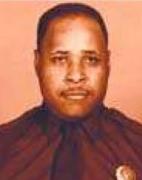
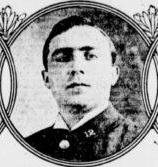
In the early morning hours of April 10, 1937, a brave and dedicated New York City Police Detective, Michael J. Foley, lost his life in a violent shootout. At 37 years old, he had served on the force for 13 years, earning the rank of Detective just two years after joining. On that fateful day, Detective Foley and his partner, Detective John Gallagher, were conducting surveillance at the Café Boulevard, a second-floor restaurant at 144 Second Avenue in Manhattan that had been the target of a
robbery just six weeks prior.
As the detectives were seated, four armed men stormed into the establishment, announcing a holdup. A fierce gun battle erupted when one of the assailants opened fire. Detective Foley, without hesitation, drew his weapon and returned fire, but he was tragically struck by a bullet to the abdomen. Despite his grave injury, the chaos continued. One of the suspects was wounded and dragged away by an accomplice as they fled the scene. Two other perpetrators took patrons hostage in the back of the restaurant.
Detective Gallagher, seeing his partner fall, rushed to his side and, with his firearm still aimed at the remaining criminals, held them at bay until backup arrived. He then hurried his wounded partner to the hospital, but Detective Foley's injuries proved to be fatal. He was survived by his wife and daughter.
The subsequent investigation led to the apprehension of all four suspects. One of the injured robbers was arrested when he sought medical treatment for his gunshot wound. In the end, six individuals were convicted in connection with Detective Foley's murder and were sentenced to death. Four of these men were ultimately executed for their roles in the crime, with the first three executions taking place on January 26, 1939, and the fourth on September 12, 1940. The sentences of the remaining two were commuted.
Decades later, a dark chapter of this case came to light. It was revealed that one of the men convicted, Isidore 'Beansy' Zimmerman, had been wrongfully implicated. While he was not present during the shooting, he was accused of planning the robbery based on the testimony of alleged accomplices who had been granted immunity. Just before his scheduled execution, Governor Herbert Lehman commuted Zimmerman's sentence to life in prison. After spending over two decades behind bars, further investigation uncovered that evidence of conflicting witness statements had been concealed by the prosecution. This led to a new trial being ordered in 1961, and prosecutors chose not to retry the case. Zimmerman was released from prison that same year and the original indictment against him was dismissed in 1967. In 1983, he was awarded a significant sum in a lawsuit against the state, though he passed away shortly after.