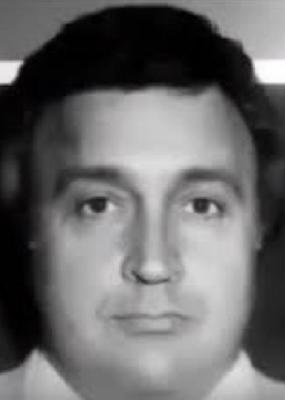
On December 16, 1985, Thomas “Tommy” Bilotti, a 45-year-old Italian-American man, rode into Midtown Manhattan as the close bodyguard and newly appointed underboss to Gambino crime family boss Paul Castellano, acting as the driver for a routine-looking evening arrival at Sparks Steak House. Bilotti’s sudden rise had intensified a simmering internal feud inside the organization, and by the time the car turned onto East 46th Street, the dispute had already hardened into a plan to remove both men in one public stroke.
Just before 5:30 p.m., as the limousine pulled up outside the restaurant, a small team of gunmen moved with rehearsed certainty. Accounts describe the assailants as dressed to blend into winter crowds—trench coats and distinctive fur hats—closing the distance quickly as the car stopped. Castellano stepped out into the cold air and was immediately met with gunfire; Bilotti, beside him in the chaos, was also shot down on the street near the vehicle. The shooting was fast, brazen, and over in moments, leaving both men dead at the curb in front of a busy Manhattan steakhouse, a scene that felt less like a robbery or spontaneous violence and more like a message delivered in plain sight.
In the hours and days that followed, investigators treated the murders as a professional mob hit tied to a power transfer. The names that hovered over the case were not random: John Gotti, already a prominent figure within the Gambino ranks, was widely identified in later law-enforcement accounts as the organizer who had ordered the assassination. Other figures in Gotti’s circle—Salvatore “Sammy the Bull” Gravano and Frank DeCicco among them—were repeatedly linked to the conspiracy in later descriptions of how the coup was assembled and executed.
The suspected gun team described in later reporting and case narratives included Gambino-affiliated men such as John Carneglia and Salvatore Scala, and other shooters often named in connection with the ambush, including Vincent Artuso and Edward “Eddie” Lino. Yet for the men believed to have been on the sidewalk that night, the legal story did not neatly follow the street story: Scala is described in biographical accounts as a suspect who was never charged in connection with the murders, and law-enforcement-focused profiles likewise note that Carneglia was believed to have participated but faced no charges specifically tied to the Sparks shooting.
Years later, the case shifted from whispered attribution to courtroom proof when federal investigators built a broader racketeering prosecution around the Gambino leadership. In December 1990, FBI agents and NYPD detectives arrested Gotti, and the government ultimately pursued charges that included the murder of Bilotti among the racketeering acts. The record of the federal case details that Gotti was charged with predicate acts including the murder of Paul Castellano and the murder of Thomas Bilotti, and that the prosecution’s evidence combined extensive electronic surveillance with insider cooperation—most notably Gravano, who turned and testified at length about the organization and the crimes.
That prosecution ended with convictions that formally attached responsibility for Bilotti’s death to the conspiracy that had put Gotti on top. Court summaries and law-enforcement accounts state that on April 2, 1992, Gotti was convicted on multiple counts, including for ordering the murders of Castellano and Bilotti, and he received a life sentence in federal court. The Sparks ambush—once a scene of unanswered questions and sudden silence—ultimately became, in federal terms, one of the defining acts used to prove how power was seized and maintained, even if some of the suspected triggermen on the street that evening were never themselves charged for the killings.