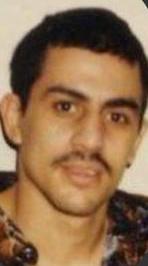
Daniel Conti, a 28-year-old man from Brooklyn, was found dead on October 29, 1977, after his body turned up in the trunk of a car left near the intersection of Rochester Avenue and President Street, by Lincoln Terrace Park. Accounts tied to later organized-crime investigations describe the discovery as grimly accidental: people already treating the vehicle as something to be picked apart—stripped for parts—opened the trunk and found a corpse instead of spare metal.
The way he was killed was just as blunt as the method of disposal. Later summaries of the case describe him as having been shot in the eye and the neck, a close-range kind of violence meant to leave no doubt. The choice to hide him in a trunk fit a pattern that would become infamous in the years that followed, when a string of bodies—some dismembered, some simply dumped—were linked in the public record and in testimony to a crew operating out of Brooklyn.
Those same sources point to a motive rooted in fear and suspicion rather than a public feud. Conti is described as being caught up around a failed hijacking attempt, and then seen as a possible weak link once attention from investigators began to form. In that telling, it wasn’t a random street killing but an internal decision—made when someone inside a criminal circle starts to look like a liability.
The names that surface as suspects in these accounts are Roy DeMeo and Peter LaFroscia—striking, in part, because LaFroscia is described as Conti’s brother-in-law. The story that later coalesced around the case is that proximity didn’t protect him; it made him easier to reach, easier to lure, easier to silence. These attributions appear in later compilations describing DeMeo-crew activity, rather than in contemporaneous public charging documents focused specifically on Conti’s homicide.
As for arrests and courtroom outcomes, the clearest public paper trail runs through the broader prosecutions of the stolen-car and racketeering operations associated with that same circle. Federal cases stemming from an October 4, 1984 indictment led to convictions after a lengthy 1985–1986 trial; in the appeal record, Peter LaFroscia is listed among defendants convicted for a conspiracy tied to shipping stolen automobiles, while murder-related convictions discussed there focus on other victims. Roy DeMeo himself was not brought to trial—he was killed in 1983—and later convictions involving other crew members are described as growing out of the wider investigation into the organization’s violence and rackets, not as a discrete prosecution of Conti’s killing in the materials that are readily accessible.