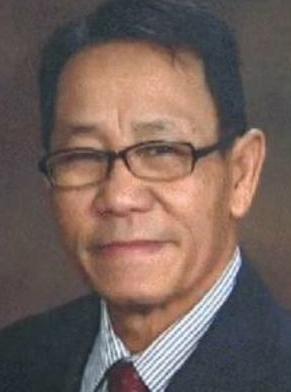
Vienchaleun Kettavong, a 71-year-old Asian man from Rush, New York, died on September 23, 2014, and left behind a family that had learned to count on his steady presence—his wife, Saysamone, and their children and grandchildren, whose names appeared in the obituary that followed just days later, along with the quiet fact of a life that began far away in Nong Nam Chanh, Laos.
That Tuesday afternoon in the town of Rush—woods thick enough to swallow sound and distance—he went out squirrel hunting with a friend and the friend’s son, moving through the kind of rugged, heavily forested terrain that made even reaching the area difficult. Investigators said the younger hunter raised his rifle at what he believed was a squirrel, fired, and instead struck Kettavong. He was pronounced dead at the scene, and the remoteness of the location meant that recovering his body took hours.
In the immediate aftermath, authorities treated the case as an active investigation rather than a done story. Reports described the shooter simply as the friend’s son, and law enforcement did not announce an arrest. No charges were filed at the time those accounts were published, with officials stating the investigation was continuing. Other reporting identified the hunting party with more specificity—placing the incident in woods between local roads and landmarks near West Henrietta Road and the Brooks Gun Club, and naming the friend as KT Kounnavong and the shooter as Phetsouvahn Kounnavong—while still framing the fatal shot as a mistake made in the moment, when a target was misidentified in the brush.
News of his death traveled quickly through the parts of his life that had nothing to do with hunting. Rochester Institute of Technology noted that he had worked in Facilities Management Services for 20 years, and that coworkers and community members were mourning a retiree remembered for his long service. Soon after, funeral arrangements were announced in Livonia, drawing friends and relatives into rooms where stories replaced what could not be repaired, and where the final shape of his life—husband, father, grandfather, immigrant, worker—stood in painful contrast to the abruptness of how it ended in the woods outside Rush.