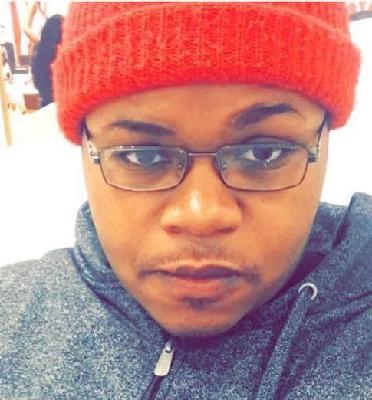
Nicolas Vargas Jr., a 22-year-old Black male, was killed on August 31, 2018, in a burst of violence near an IHOP around 232nd Street in the Bronx, a place that should have been just another late-night corner in the city but instead became the setting for his final moments. According to federal prosecutors, he was shot in the head in an attack that later came to be tied not simply to a single street confrontation, but to the much larger world of gang violence that had been spilling across
neighborhoods in New York. What may once have looked like an isolated killing was ultimately described by authorities as part of a far broader campaign of bloodshed carried out by members of Own Every Dollar, or OED, a subset of the Trinitarios gang operating in and around Washington Heights.
For years after Nicolas’s death, the case appears to have carried the weight of unanswered grief while investigators built a much larger racketeering case. Then, in a major federal prosecution, prosecutors said the man responsible for killing Nicolas was Jowenky Nunez Jr., also known as “Juju,” whom they described as a leader within OED. In the government’s account, Nunez was not accused of a momentary act of random violence, but of murder as part of a gang enterprise that used shootings, attempted murders, and narcotics trafficking to maintain power. Nicolas’s killing was presented in court as one of four murders connected to the defendants in the case, placing his death within a chain of violent acts that prosecutors said stretched over years.
The case moved far beyond an arrest and into a sweeping trial. In May 2025, federal prosecutors announced that Jowenky Nunez Jr., Brian Hernandez, and Iyaury Rodriguez-Rosario had been convicted after a five-week jury trial on numerous counts tied to murders and attempted murders committed for OED. Of those three men, prosecutors specifically said that Nunez murdered Nicolas Vargas and Hector Cruz, while all three were also held responsible for the murders of Richard Dominguez and Israel Cabrera. That means the public record now points clearly to Nunez as the killer in Nicolas’s case, and it also shows that the homicide was folded into a larger racketeering prosecution rather than treated only as a standalone local murder case.
The convictions marked the strongest public resolution the case has received. Federal authorities said the three convicted men were found guilty on 25 counts in total, and that each faces mandatory life imprisonment on certain counts. In Nicolas’s case, the public reporting from that federal announcement leaves little ambiguity about who prosecutors and the jury concluded was responsible. What began as the killing of a young man in the Bronx ended years later in a courtroom where his death was named as one part of a violent gang conspiracy. The story that emerged was not only about how Nicolas Vargas Jr. died, but about how his killing fit into a larger cycle of organized retaliation and ruthless street power, one that prosecutors said finally ended with convictions that held the men involved accountable.