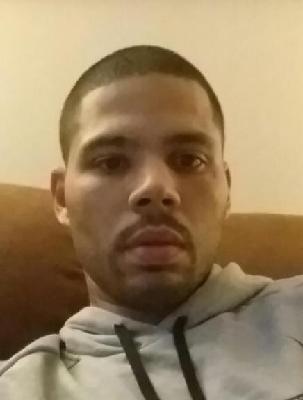
In March of 2019, family members of Martino Robert Duffin grew concerned when they had not heard from the 32-year-old man in several days. After being unable to reach him by phone, they requested that police perform a welfare check at his apartment on Kinship Road in Dundalk, Maryland. On Friday, March 15, 2019, Baltimore County police officers entered the residence and discovered Mr. Duffin's body.
He had sustained trauma to his upper body, and the circumstances immediately pointed towards a suspicious death, prompting a homicide investigation.
An autopsy later confirmed that Martino Duffin's death was a homicide caused by two gunshot wounds to the head, fired at close range. Investigators reviewed surveillance footage from the apartment building which led them to identify a potential suspect who was not a resident but had gained access to the building. This individual was identified as Albert Myron Muldrow, a 31-year-old man from Severn. Muldrow was subsequently arrested and charged with first-degree murder. During questioning, he admitted to being in Duffin's apartment after meeting him through an online chat room for a sexual encounter, but he denied any involvement in the murder. He also confessed to stealing some of the victim's belongings.
Albert Muldrow, who had an extensive prior criminal record including convictions for manslaughter and second-degree rape, was tried by a jury in the Circuit Court for Baltimore County. He was found guilty on eight of nine counts, including first-degree murder. In February 2022, a judge sentenced Muldrow to life in prison without the possibility of parole, with an additional consecutive 20-year sentence for another offense.
Following his conviction, Muldrow appealed, arguing that the court had erred by refusing to ask potential jurors during jury selection about any potential bias against gay men, given that the sexual encounter between him and Duffin was a component of the case. In December 2023, the Appellate Court of Maryland agreed, ruling that the trial court should have allowed questions about bias against sexual orientation. Citing this error, the appellate court remanded the case for further proceedings, creating the possibility of a new trial.