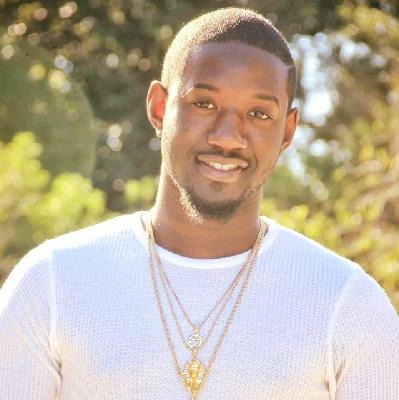
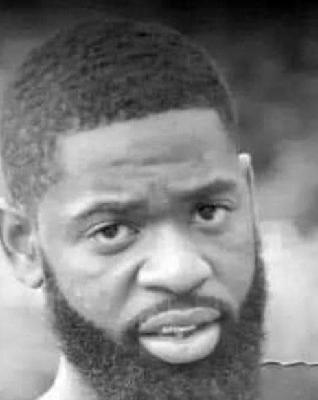
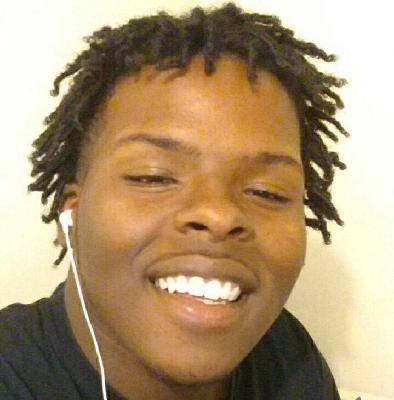
On a Sunday night in early November 2018, Malcolm Jerome Washington, a 27-year-old Black / African American man from North Charleston, was in the area of Rivers Avenue and Target Street with a woman he knew when gunfire shattered the ordinary rhythm of the neighborhood. Just before 10 p.m. on November 4, police were dispatched after reports of shots fired; when officers arrived, they found Malcolm lying on the ground suffering from a gunshot wound while his companion had been grazed in the leg.
Despite emergency efforts, he was pronounced dead at the scene, his life ending on the pavement of a familiar street in his own city.
In the hours and days that followed, the sterile language of official reports—“victim,” “gunshot wound,” “pronounced deceased”—stood in stark contrast to the way his family and friends knew him. Local obituaries recorded that Malcolm “entered into eternal rest” on November 4, 2018, naming him as the son of the late Joseph J. Washington Jr. and Sandra Washington Williams and noting that he left behind siblings and extended family who now had to plan a funeral instead of a future. His service was held on November 10 at Fielding Home for Funerals on Logan Street in Charleston, and afterwards his body was carried to Payne Memorial Cemetery on Grimball Road on James Island, where he was laid to rest. A separate memorial listing on Find a Grave places him in the Payne RMUE Church Memorial Garden there, tying his final resting place to the same Lowcountry ground where he had grown up.
Beyond the formal notices, an online tribute page dedicated to victims of gun violence added Malcolm’s name to a growing list, recording simply that he was lost to gun violence in North Charleston on November 4, 2018. Visitors lit virtual candles, left brief comments, and, in doing so, turned his story from a line in a police log into part of a larger testament to lives cut short by bullets. The entry linked back to early news coverage that confirmed the date and location of the shooting but offered little comfort about why it had happened or how such a sudden eruption of violence had begun.
As the family made arrangements, detectives with the North Charleston Police Department began the slow work of turning that chaotic scene into a solvable case. Witness accounts, physical evidence, and whatever could be pulled from the streets around Rivers Avenue and Target Street gradually formed a picture clear enough for an arrest. Eleven days after the shooting, on November 15, 2018, police announced that they had taken 19-year-old Javion Omar Mazyck into custody. He was arrested without incident and charged with murder in Malcolm Washington’s death, attempted murder for the wounding of the woman who had been with Malcolm that night, and possession of a weapon during a violent crime. The charges suggested investigators believed the gunfire was not random, that someone had deliberately taken aim at Malcolm and the woman beside him.
Even with one suspect in jail, the investigation did not stop. Less than a week later, on November 21, officers moved on a second man they believed to be involved. Acting on information that 22-year-old Allen Bellamy was in a vehicle near Rivers Avenue and Grimke Street, North Charleston police attempted a traffic stop. Instead of yielding, the car fled, and a pursuit unfolded through city streets until the driver lost control in the 2300 block of Sorentrue Avenue and crashed into another vehicle. Several occupants were detained, and Bellamy was arrested and charged, like Mazyck, with murder, attempted murder, and possession of a firearm during the commission of a violent crime in connection with the shooting that killed Malcolm and injured his companion. With his arrest, police publicly tied two men to the violence on Target Street, portraying the crime not as an anonymous drive-by, but as an attack for which they believed specific individuals were responsible.
Public reporting from that period emphasized the arrests and the seriousness of the charges but did not give detailed explanations of motive, relationships among the men, or the events that led up to the moment shots were fired. The woman who had been grazed by a bullet appears in coverage only briefly, identified not by name but by the wound that linked her to the crime, a living witness whose leg carried the burn of the same gunfire that killed Malcolm. The charges of attempted murder connected directly to her presence, making clear that investigators believed the shooter or shooters had intended to kill not just once, but twice on that November night.
In the years that followed, the homicide case receded from headlines even as the names of the accused surfaced again in other corners of the criminal justice system. Court and corrections records show that Mazyck later accumulated a series of convictions for drug, larceny, domestic violence, and related offenses in Charleston and Berkeley counties and is currently serving multiple straight sentences in the South Carolina Department of Corrections, with a projected release date in 2026. Separate booking records and arrest logs trace repeated arrests for Allen Trevor Bellamy as well, on traffic, theft, and other charges in the years after Malcolm’s death. Yet, despite these detailed records of their later troubles, publicly accessible sources do not clearly spell out the final courtroom resolution of the murder and attempted-murder charges tied specifically to the killing of Malcolm Washington and the wounding of his companion. From what can be seen outside the sealed confines of case files and unreported hearings, the story that remains is one of a young man whose life ended on a North Charleston street, two men arrested and accused of taking that life, and a family left to grieve at a graveside on James Island while the full legal fate of those accused remains largely out of the public eye.