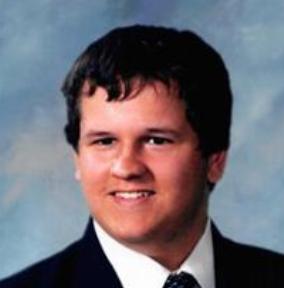
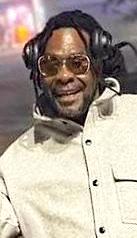
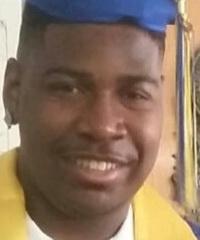
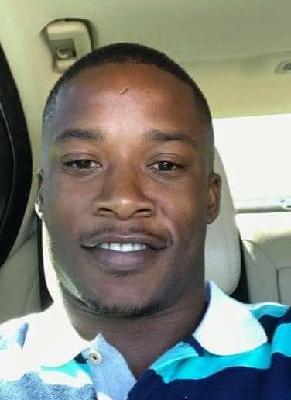
Damien Marquise Stokes was a 25-year-old Black/African American male from North Charleston, South Carolina, walking through a familiar industrial landscape on the evening of March 14, 2019, when his life was cut short. He had just stepped out of the nearby ARD Warehouse facility and into the parking lot of the Cummins Turbo plant on Palmetto Commerce Parkway, a sprawling complex where engines and turbochargers are built and shipped every day. It was shortly after 7 p.m.
when a vehicle rolled into the lot, closing the distance between the concrete, the sodium lights, and the man crossing toward his car. Witnesses later told investigators that the vehicle pulled alongside him and gunfire erupted, striking him multiple times and dropping him on the asphalt before the car sped away into the evening traffic. Emergency crews tried to save him in the parking lot, but he was pronounced dead at the scene, and the county coroner soon identified him publicly as the victim of what police immediately called a deadly drive-by shooting.
In the hours that followed, the busy industrial corridor around Palmetto Commerce Parkway became a crime scene. Patrol cars and crime-scene tape ringed the Cummins lot as detectives worked under artificial lights, marking shell casings and photographing the spot where Stokes fell. Investigators quickly focused on a blue Honda CR-V that appeared to have been used in the ambush; two witnesses reported that they had captured part of the attack on their phones, giving police crucial visual evidence to work with as they tried to track the vehicle down. Public appeals went out asking anyone who recognized the SUV to come forward, and tip lines were advertised for those who might know who was inside the car that night. Away from the industrial park, family and friends were left to plan a funeral rather than a homecoming, gathering on March 23, 2019, at the Alfred Williams Community Life Center in North Charleston to say goodbye, as online memorial pages invited people to light virtual candles and leave condolences in his name.
Within a month, the investigation that began with anonymous tips and grainy images led to a name. In April 2019, officers arrested 23-year-old Ishmal Rashad Weston, saying he was responsible for the March 14 homicide on Palmetto Commerce Parkway. He was charged with murder and booked into the county jail after a magistrate judge declined to set bond. In recounting the attack, investigators described how Stokes had walked out of the warehouse toward the Cummins parking lot when a blue Honda CR-V drove up beside him and people inside opened fire, then fled before officers arrived. That account, now tied to Weston’s name, turned the shooting from a terrifying unknown into a case with a publicly identified suspect, even as detectives warned that more arrests were likely and the wider contours of the plot remained under scrutiny.
A few days later, attention shifted briefly to another state. In mid-April 2019, authorities announced that a second suspect, Jamal Dwayne Smalls Jr., had been located and arrested in Atlanta, Georgia, on a murder warrant connected to the same drive-by shooting in the Cummins parking lot. He was held in a Fulton County jail while local officials began extradition proceedings to bring him back to South Carolina. Reporting at the time emphasized that both Smalls and Weston faced murder charges for their alleged roles in the ambush, and that the investigation was still active, hinting that the circle of people believed to be involved extended beyond the two men already in custody.
By early May 2019, investigators said that circle was complete. Officers working with U.S. Marshals tracked a third suspect, Thomas Scott McFadden Jr., to the Moncks Corner area of Berkeley County and took him into custody. He was described as the third and final suspect in the Cummins Turbo Plant drive-by and was charged with murder in connection with Stokes’s killing. During the arrest, investigators recovered a firearm that had been reported stolen in Orlando, Florida, a detail that suggested the weapon itself had traveled some distance before ending up in the Lowcountry violence. Separate reporting linked McFadden to other serious allegations, including charges in the January 2019 fatal shooting of Steven Lincoln Jr. near a cemetery in Berkeley County, and noted that law enforcement officers across the tri-county region had long suspected him in multiple shootings. The Cummins case, however, was the one that would ultimately define his future.
The legal story that followed was complicated and played out over several years. News coverage in 2022 pointed out that Weston, once the first man charged with murder in the case, was by then out on bond for that charge when he was arrested again, this time on serious narcotics and weapons counts after a drug investigation in Summerville. Those reports reiterated that he had originally been jailed in April 2019 for the March homicide outside the Cummins plant and that two other men were arrested soon after him in the same case. Later, court records from Charleston County show that the earlier murder case listed under his name was eventually marked nolle prosequi in August 2023, indicating that prosecutors chose to drop that specific charge. At the same time, state prison records now list him as serving a 15-year sentence for accessory after the fact to a felony classified with murder, alongside multi-year sentences for trafficking LSD, other narcotics offenses, and a firearms provision, with a projected release in 2029.
For McFadden, the path led to a courtroom and a life sentence. Nearly four years after the shooting in the Cummins parking lot, a Charleston County jury heard the evidence against him and, according to summarized reporting from local media aggregators, found him guilty of murdering Damien Stokes on March 30, 2023. Coverage noted that he was widely known by the nickname “Trigger” and that law enforcement officials had long suspected his involvement in a string of shootings around the Lincolnville area, though in at least one earlier homicide he had been acquitted. After the guilty verdict in Stokes’s case, a judge sentenced him to life in prison. Records from the South Carolina Department of Corrections confirm that McFadden is now serving an adult straight life sentence for murder from Charleston County, with no projected release date and no parole eligibility listed, confined in a state maximum-security facility.
Smalls’s trajectory is more opaque in the public record. Beyond the announcement of his arrest in Atlanta and his expected extradition to South Carolina on a murder charge tied to the Cummins drive-by, there are few widely reported updates about whether he ultimately went to trial or entered into any plea agreement in connection with Stokes’s death. The early articles that named him framed the case as one with multiple suspected participants, but subsequent coverage focused more heavily on McFadden’s prosecution and Weston's later drug and accessory convictions, leaving Smalls’s final legal outcome in this homicide largely undocumented in open news sources.
Through all of these procedural turns—arrests in different counties and states, shifting charges, and a life term handed down years after the gunfire in the parking lot—the core reality of the case has remained starkly simple. A drive-by shooting transformed an ordinary Thursday evening at an industrial plant into a scene of panic and mourning, and a young man who had only just stepped away from a warehouse doorway never made it home. While the full motive for why he was targeted has never been clearly spelled out in public reporting, the case did not disappear into obscurity. Instead, it moved steadily through the system until at least one of the men accused in the attack was convicted and sentenced to spend the rest of his life behind bars, even as other pieces of the story—particularly what ultimately became of every suspect and precisely why the blue Honda CR-V rolled into that lot—remain less fully illuminated outside the courtroom files.