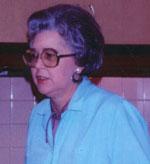
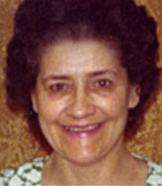
Brenda Kay Parsh was a 27-year-old woman who had come back to Cape Girardeau, Missouri, to help her mother while her father was in the hospital, expecting a stressful family visit—not a home that had already been watched and chosen.
Late on Friday, August 12, 1977, someone who wasn’t supposed to be there was already inside the Parsh home on Koch Street, lying in wait.
Investigators later said the intruder had been stalking Mary Parsh and assumed she lived alone, only to be surprised when Brenda was with her. What followed was intimate and brutal: the women were found nude on a bed, placed side-by-side, their hands bound behind their backs. Brenda was raped, and both mother and daughter were shot in the head with a. 38-caliber gun, the killer slipping away afterward as if the night were just another errand.
When the medical examination finally put official words to what the scene already screamed, the conclusion was stark: both Mary and Brenda died from gunshot wounds to the head. A probable-cause narrative later stated investigators believed the murders occurred late that Friday evening, and it notes the autopsies were conducted on August 15, 1977, in Cape Girardeau.
For Cape Girardeau, the double killing wasn’t an isolated nightmare—it was the opening chapter of an era that made ordinary routines feel dangerous. The town would be rattled by a string of homicides in the late 1970s and early 1980s, a pattern so alarming it helped spur the creation of a dedicated Major Case Squad presence in the area. Yet for decades, Brenda’s case—and several others—sat in the long, exhausting limbo of “unsolved,” with no arrest to match the violence that had erupted inside a family home.
The break came much later, not through a sudden confession out of nowhere, but through the slow tightening of modern forensics and renewed investigative focus. Authorities ultimately identified Timothy Krajcir as the man responsible, describing a predator who selected women seemingly at random, followed them from public places, returned later, broke in, and waited. He was apprehended in 2007, and Cape Girardeau’s long-cold cases—including the Parsh murders—moved at last from rumor and fear into courtrooms and charging documents.
Formal charges tied to the Cape Girardeau murders were filed on December 10, 2007. In April 2008, Krajcir pleaded guilty to five Missouri killings, including the 1977 murders of Mary Parsh and Brenda Parsh, along with additional offenses that included sexual assaults. Reports on the sentencing describe five consecutive life sentences for the murder counts, alongside broader life-term punishment—commonly summarized as 13 consecutive life terms—cementing the official resolution: Brenda’s killer was no phantom or local mystery suspect, but a serial offender who had managed, for years, to vanish back into the ordinary world after doing the unthinkable.