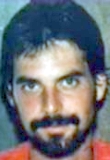
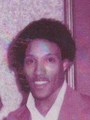
In the summer of 2001, 48-year-old Eric McClary, a resident of Reno, Nevada, was on vacation with his wife in the unfamiliar surroundings of Gladwin County, Michigan. Having never been to Michigan before, the area was new and unknown to him. On the evening of July 2nd, at approximately 6:30 p.m., he expressed an interest in going for a swim in the nearby Tittabawasee River. He was last seen wearing a green, multi-colored swimsuit.
Worryingly, Eric had Parkinson's Disease and did not have his necessary medication with him when he disappeared. This medical condition could cause him to become confused about his whereabouts.
Concern grew when Eric did not return from his intended swim. He had left personal belongings behind at the cabin where he and his wife were staying, including his wallet and prescription glasses. An intensive search was launched to find him. For five days, divers scoured the Tittabawasee River, but their efforts yielded no clues regarding his location or what might have happened to him. The search for Eric was extensive, but despite the efforts of authorities and volunteers, he was not found. His disappearance left his family and friends in a state of uncertainty and distress.
The case of Eric McClary has remained unsolved for years, leaving a void for those who knew him. McClary was a notable figure in his home community, known as a partner in the Washoe Wine and Cheese shop and the Great Basin Brewery Company, where he had even won awards for his beer. He was also the son of political activist Maya Miller and served as board chairman for an environmental organization his parents had founded. The overview of this case is that a man on vacation, unfamiliar with the area and suffering from a serious medical condition without his medication, vanished after expressing an intent to go swimming. Authorities have expressed the belief that he could not have survived for long on his own. The lack of any evidence or contact since that July evening has left his case a lingering and sorrowful mystery.
Eric McClary was a 48-year-old man who is listed by the National Missing and Unidentified Persons System as having last been seen in Gladwin County, Michigan, on July 2, 2001. Online sources contain an important discrepancy in the year and his age: NamUs currently records July 2, 2001, and age 48, while contemporaneous Midland Daily News reporting and The Charley Project describe him as 49 years old and place the disappearance on July 2, 2002. Regardless of that records discrepancy, the circumstances reported across the sources are substantially consistent. McClary lived in Reno, Nevada, and was vacationing in Gladwin County with his wife when he disappeared. He was approximately 6 feet tall and weighed about 250 pounds, with blue eyes and graying brown hair. He sometimes wore his hair in a ponytail and could have a mustache, beard, or goatee. Most importantly for the search, McClary had Parkinson’s disease, required medication for the condition, and had previously been known to become confused about his surroundings. He was unfamiliar with Michigan because this was reportedly his first visit to the state.
McClary and his wife were staying at the Lost Arrow Resort in Gladwin County when the ordinary summer vacation took a frightening turn. He was last seen at approximately 6:30 in the evening after expressing an interest in swimming in the Tittabawassee River near the cabin where the couple was staying. His wife advised him against going into the river, but according to The Charley Project, McClary left the cabin and headed back toward the water anyway. A Midland Daily News report published shortly after he vanished similarly stated that he left the resort apparently intending to swim. The newspaper described him as wearing two-tone swim trunks with a rainbow-colored towel draped over his shoulder, while missing-person records describe his swimwear as multicolored green swimming trunks. His prescription glasses were left behind at the cabin, as were his wallet and the medication he needed for Parkinson’s disease. Those omissions immediately made his disappearance more urgent, because he was without items that could have helped him identify himself, navigate unfamiliar surroundings, or manage a serious medical condition.
Searchers quickly concentrated on the Tittabawassee River and the area around Lost Arrow Resort. The effort grew into a substantial multi-agency search. According to contemporaneous reporting, Gladwin County Sheriff’s deputies maintained patrols on the water near the resort, while Michigan State Police and Coast Guard personnel joined the operation. Local pilots searched from the air, and a Michigan State Police helicopter equipped with infrared technology was used to examine the area. Police dogs from the Richfield Township Police Department assisted with searches of both the grounds and water, and volunteers from the Clement and Wildwood fire departments searched on foot. The Charley Project reports that divers spent five days searching the Tittabawassee River without finding evidence that explained McClary’s disappearance. Despite the number of people and resources committed to the search, neither McClary nor any definitive sign of what happened to him was located.
Investigators had reason to consider possibilities beyond an accidental entry into the river, at least during the early stages. Gladwin County Sheriff Michael Hargrave told the Midland Daily News that McClary had discussed swimming that day, but had also mentioned going to Detroit and Canada. Because Parkinson’s disease could leave him confused and disoriented when he was without his medication, investigators could not immediately assume that he had necessarily entered the river. Search teams examined the grounds around the resort as well as the water, and authorities eventually concluded that the immediate land area had been thoroughly covered. The sheriff’s office continued exploring the river while trying to determine whether McClary could have wandered away or found some other means of leaving the area. The lack of his wallet, glasses, medication, and familiarity with Michigan made any possibility that he had traveled away from the resort deeply concerning.
As the search continued without success, investigators increasingly believed the river was the most likely explanation. The Midland Daily News later reported that police continued returning to the area where McClary was thought to have disappeared, concentrating on the stretch of the Tittabawassee River running through Lost Arrow. Conditions beneath the surface made the work extremely difficult. The river was described as being filled with weeds and submerged trees, with poor underwater visibility that made searches hazardous and left open the possibility that a person could remain concealed beneath the water. Sheriff Hargrave said investigators strongly believed McClary was somewhere in the river, even though repeated searches had failed to find him. The case was frustrating for investigators precisely because extensive ground searches, water searches, aircraft, police dogs, divers, firefighters, and volunteers had all been used without producing the evidence needed to resolve what happened.
McClary’s disappearance affected far more than the search teams working along the river. His wife, Penny McClary, publicly expressed appreciation for the effort law enforcement had made and said investigators had done everything they could. As the weeks passed with no discovery, she came to believe her husband had died. The uncertainty remained painful, however, because believing that a loved one is gone is very different from having an answer about where that person is and what happened to them. Family members planned a gathering to celebrate McClary’s life while searches were still being conducted. Law enforcement officials acknowledged that, as time passed, it was possible that hunters, people searching for mushrooms, boaters, or others spending time in the area might eventually encounter evidence that organized searches had been unable to find.
Outside the circumstances of his disappearance, McClary had led a varied and accomplished life. The Charley Project reports that he was involved in the brewing industry in Nevada as a partner in Washoe Wine and Cheese in Reno and the Great Basin Brewing Company in Sparks, and that beer associated with his work had won state and national championships. He was the son of political activist Maya Miller and served as chairman of the Foresta Institute, the nonprofit environmental organization founded by his parents. He had also worked as a scuba instructor and property manager and had reviewed music and films. These details provide an important reminder that the case is not simply a collection of search records and physical descriptions; it concerns a husband, businessman, environmental advocate, and member of a family whose vacation ended in enduring uncertainty.
The Gladwin County Sheriff’s Department remains the investigating agency associated with McClary’s case, and publicly available missing-person records continue to list the case without a confirmed recovery. The Charley Project classifies him as lost or injured missing and reports that authorities believed he could not have survived for long without his medication and was likely deceased, but no recovery has provided definitive physical confirmation of what happened. In overview, Eric McClary was a Nevada man vacationing with his wife at Lost Arrow Resort in Gladwin County when he disappeared after talking about swimming in the Tittabawassee River; NamUs currently lists his last-contact date as July 2, 2001, while contemporary news reports and another long-established missing-person source place the event in 2002. He left behind his glasses, wallet, and Parkinson’s medication, and an extensive search involving sheriff’s deputies, divers, police dogs, firefighters, Michigan State Police, Coast Guard personnel, aircraft, and volunteers failed to locate him. Investigators ultimately came to believe that the difficult, debris-filled river was the most likely place he disappeared, but without finding him, the final sequence of events has never been established. His case remains the story of a vacation transformed into a long search, a family left without complete answers, and a man whose last known decision to walk toward the river became the beginning of an enduring mystery.Last Seen: Jul 2, 2001