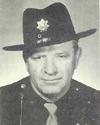
On the evening of September 1, 1981, in the lakeside town of Beverly Shores, Indiana, Paul Witte, a 44-year-old man and volunteer firefighter, lay dozing on the living room couch of the family home he shared with his wife, Hilma “Marie” Witte, and their two sons, Eric and John. He worked in the steel industry and fought fires on a volunteer basis, a strict, authoritarian father whose temper and physical discipline left his eldest boy with both good memories and scars.
For months, tension in the house had been building. The family’s finances were precarious, arguments flared over money, and Marie had begun telling relatives she wanted to be free of Paul, fearing that a divorce would leave her with little and complaining that he was abusive toward her and the boys.
Behind closed doors, Marie had already tried and failed to turn those complaints into murder. According to later court findings, she began quietly tampering with Paul’s meals, lacing his food with rat poison and Valium in the hope that he would sicken and die without anyone suspecting foul play. When the slow poisoning didn’t produce the result she wanted, she turned to Eric, then in his mid-teens, and floated different ways he might kill his father: shooting him, or striking him with a hammer while he slept. At first, Eric resisted, but her pressure escalated. She told him that Paul’s threats of divorce would leave them homeless, and according to appellate records she leveraged his age, suggesting that as a juvenile he would face a lighter punishment than she would if they were caught.
That September day, Marie pushed her plan to its conclusion. She left the house after telling Eric that she would not return until Paul was dead, calling later to demand an answer: had he done it yet? When Eric again said he could not, she threatened not to come home unless his father was killed. Alone with his sleeping father on the couch, the teenager finally took one of Paul’s handguns and fired a single shot into his head. Paul never woke up. Moments later, Marie was on the phone with police, sounding frantic as she reported that she had come home to find her husband dead from a gunshot wound.
When officers arrived, they found Paul on the couch with a fatal head wound and a chaotic, cluttered house that, to them, made Eric’s story possible. The boy told investigators he had been handling a. 357 Magnum revolver, intending to ask his father about its safety mechanism, when he tripped on a rug and the gun went off, sending a bullet across the room into the couch where his father slept. His younger brother John and grandmother Margaret “Marcie” O’Donnell said they had not seen the shooting. There was no obvious evidence of a struggle, and the only foreign substance later found in Paul’s body was common pain medicine, not poison. With a grieving wife insisting she’d been out of the house and a teenager repeating the same story in front of a lawyer, investigators reluctantly accepted the incident as a tragic household accident. Paul’s death was ruled accidental, and Eric walked free.
Life did not return to normal so much as it shifted its stage. After collecting a small life-insurance payout, Marie moved with Eric and John into the Trail Creek, Indiana, home of Paul’s widowed stepmother, Elaine Witte. Outwardly it looked like a family regrouping after tragedy: Elaine generous and welcoming, Marie seemingly calmer, Eric growing into adulthood and eventually joining the U.S. Navy, just as his father had once done. But behind the scenes, Marie’s ambitions and fears only grew. She had discovered that living with Elaine also meant access to the older woman’s savings and monthly Social Security checks, and soon she began talking with her sons about eliminating this new obstacle as well.
By early 1984, Elaine had quietly vanished. Neighbors, who were used to seeing her tending her garden, realized they had not seen her in months and contacted police. Marie had an answer ready: Elaine, she said, was traveling, visiting Eric while he was stationed with the Navy, and was in no hurry to come home. But investigators noticed troubling contradictions. Elaine’s car had been sold, her bank accounts showed large withdrawals, and her Social Security checks were still being cashed locally despite her supposed cross-country trip. Phone records, too, suggested no one was calling in or out from a woman on an extended vacation.
Eventually, authorities learned that Marie and her younger son, John—nicknamed Butch—had fled Indiana altogether. Tracing financial records led investigators to California, where they found Marie cashing one of Elaine’s Social Security checks while preparing to cross the border into Mexico. She and John were arrested on forgery charges, and the family’s carefully managed story began to fall apart. Under pressure, Margaret “Marcie” O’Donnell told investigators that Elaine was dead and that her grandson Butch had “accidentally” shot her with a crossbow. John eventually admitted that his mother had ordered him to kill his grandmother, offering him a choice between strangling her or shooting her with the crossbow after poisoning attempts failed. He chose the crossbow and fired into Elaine’s ribs while she was in her own home.
What followed was a grotesque effort to erase the crime. John and Marie, with Marcie’s involvement, froze Elaine’s body and, over the course of months, dismembered it with knives, saws, a chisel, even household appliances like a garbage disposal, trash compactor, deep fat fryer, and microwave, breaking the remains down into pieces that could be hidden or discarded. Eric, who had joined the Navy in part to escape his mother’s demands, was drawn back into the nightmare when Marie and John needed help disposing of what was left. According to later accounts, some remains were stored in a cooler, then transported and scattered across Indiana, Illinois, and California as Eric and a Navy friend drove back west.
Once the forgery case led police to Elaine’s disappearance and John’s detailed confession, investigators reopened Paul’s file in Porter County. Now they looked at the 1981 shooting not as a freak accident but as the first act in a pattern of family murder. John told them that his father had been shot while asleep on the sofa at their mother’s insistence, contradicting the earlier story about a stumble and misfire. Marcie and Eric also gave new statements. Eric admitted that his original account to police was a lie and that his mother had been manipulating him for months, alternating between claims of abuse, threats of divorce and ruin, and emotional blackmail—threatening suicide and withholding her return home—until he picked up the gun and fired.
The legal aftermath was sprawling. In California, Marie, Eric, and John were first charged with forgery tied to the stolen Social Security checks, but the case swiftly expanded. Back in Indiana, prosecutors charged Hilma Marie Witte and John David Witte with murder and conspiracy to commit murder for Elaine’s killing, and Eric Witte and Margaret “Marcie” O’Donnell with conspiracy to commit murder and related offenses over the cover-up and disposal. As the investigation into Paul’s death was revived, Marie and Eric were also charged with his murder, with the state arguing that she had orchestrated both homicides as part of a long-term scheme that used her own sons as weapons.
Faced with the evidence and the prospect of spending much of their lives in prison, both brothers eventually accepted plea agreements. Eric and John each pleaded guilty to reduced charges of voluntary manslaughter for their roles in the killings and agreed to testify against their mother. Sentencing reports and later coverage describe John receiving a 20-year term, Eric a 5-year term; both were released early in 1996 for good behavior. Margaret O’Donnell pleaded guilty to assisting a criminal and served a six-year sentence before her death.
Hilma Marie Witte, by contrast, went to trial. In one proceeding, she was convicted of murder and conspiracy to commit murder for the killing of Elaine and sentenced to a total of 90 years—60 years on the murder count and 30 on the conspiracy count, to be served consecutively. In a separate Porter County case arising from Paul’s death, she was found guilty of murder and attempted murder, with the court noting the months of planning, the use of her teenage son as the triggerman, and the abuse and financial discord that formed the backdrop to the crime. She received a 50-year sentence in that case, ordered to run concurrent with or consecutive to her LaPorte County terms depending on subsequent sentencing orders and appeals.
As appeals wound their way through Indiana’s courts, the essential facts remained unchanged: in 1981, Paul Witte was shot in the head while he slept on his own couch; for years his death was written off as an accident caused by a clumsy teenage son; and only after a second, even more macabre family killing did the full scope of Marie Witte’s manipulation and planning come into focus. By the time the legal dust settled, both sons had served time and been released, while their mother remained behind bars, serving the long sentences imposed for turning her home into the scene of two murders and using her children to carry them out.