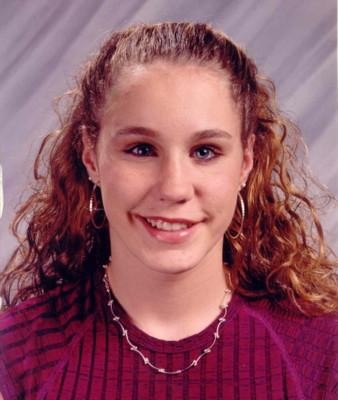
Suzanne Michele Moore, 39, was found dead on the afternoon of August 20, 2017, along a rural stretch of County Road 500 South near LaOtto in Noble County, Indiana, after a passerby spotted her body and called 911. The place where she was left was quiet and out of the way—just off the roadway—yet investigators quickly treated it as something far from accidental.
Early information released to the public said only that the death was a homicide and that details were being held back while deputies and state police worked the scene and began tracing her last known movements.
In the days and months that followed, fragments of her last hours emerged in court records. In 2017, Moore had been dating Tracey L. Martin, and they were living in Fort Wayne with Martin’s mother and brother. On the morning of August 19, Moore’s supervisor overheard her arguing on her cell phone, and at the end of the shift the supervisor watched Moore get into the passenger seat of an older tan car, still appearing to argue with the male driver. That evening, Moore and Martin visited Moore’s parents, leaving after 7:00 p.m.; at 10:12 p.m., Moore texted her mother to say she and Martin had made it home. Around that same time, Martin’s mother was preparing to leave for an overnight shift and heard the couple arguing inside the house before she left.
By the next morning, investigators say Martin began creating a false trail. Around 5:30 a.m., he called 911 pretending to be Moore, telling the operator, “I’m injured” and “I’m dying,” and claiming it was an “overdose,” then saying someone was taking “me” to St. Joseph Hospital before hanging up—yet there was no record of Moore being treated there that day. Later that morning, Martin used an ATM to withdraw a little over $500 from Moore’s bank account. Shortly before noon, he texted Moore’s mother asking if she had heard from her, claiming Moore had “stormed out” after an argument about “some male numbers” in her phone; but when his own mother returned home around noon and asked where Moore was, Martin told her Moore was sleeping in the house, even though she was never seen or heard from again.
Investigators concluded Moore had been killed somewhere else and then transported to Noble County, because the condition of the scene and her body showed she was placed at the roadside after death. She had been shot in the back of the head. An autopsy performed the next day recovered a bullet from her brain, and the doctor estimated she had been dead at least 24 hours by the time of the exam. That timeline, paired with the discovery of her body at about 2:00 p.m. on August 20, sharpened attention on what had happened between the late-night argument at the Fort Wayne house and the moment she was left along that rural road roughly a half-hour drive away.
On August 21, police executed a search warrant at the Fort Wayne home associated with Moore and Martin. A key on Martin’s keychain opened a locked safe in a room adjacent to his bedroom; inside was a handgun. Later, a firearms expert compared the bullet recovered during the autopsy to test fires from that weapon and concluded the bullet came from the gun found in the safe. Police also searched vehicles Martin had access to, including a tan 2002 Chevrolet Impala registered to his mother; investigators noted the back seat looked cleaner than the rest of the car, as if it “could have been wiped down,” and they found bags of cleaning products in the trunk. When interviewed, Martin claimed Moore had left the house on foot before she was found, but he offered shifting accounts about when she left and what he had told others, and when informed she was dead he did not ask how or where she had died.
In the immediate wake of the discovery, Martin was arrested after the search—initially on charges unrelated to murder, including possession of a firearm by a serious violent felon and possession of marijuana—while the homicide investigation continued. Years later, in 2024, prosecutors charged him with Moore’s murder, along with a firearm enhancement and a habitual-offender enhancement; his first jury trial in July 2024 ended without a verdict, but a second jury in December found him guilty as charged. The court sentenced Martin to 100 years in the Indiana Department of Correction, and in an appellate decision dated October 3, 2025, the Indiana Court of Appeals affirmed the murder conviction, holding that the circumstantial evidence—especially the staged 911 call, the ATM withdrawal, the inconsistent stories, the ballistic match to the gun in the safe, and indications of cleanup—was sufficient to support the verdict.