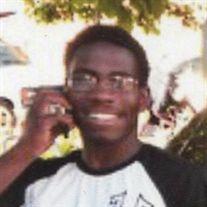
In the winter chill of a Baltimore evening, on January 19, 2024, a burst of gunfire shattered the night in the 5200 block of Fairlawn Avenue, leaving three men dead in its wake. Among them was Charlie Cameron, a 30-year-old Black male. When police arrived at the scene of the triple murder, they discovered a grim tableau. Two of the victims lay outside, while a third was found inside a building. Alongside Charlie Cameron, the other deceased men were identified as 32-year-old Willie Cameron, Jr.
and 28-year-old Dequan Thomas. All three had suffered multiple gunshot wounds and were pronounced dead at the scene. A fourth individual connected to the incident later appeared at a local hospital with injuries that were not life-threatening. The preliminary investigation suggested that the violence had erupted indoors before spilling out into the street.
The investigation into the deadly encounter led to the arrest of 21-year-old Darius Daye, who was working as a security guard at an auto repair shop on the block where the shooting occurred. Daye was subsequently charged with first-degree murder and firearm use in a felony violent crime for the deaths of Charlie Cameron, Willie Cameron, Jr., and Dequan Thomas. As the case proceeded to trial, a complex and debated narrative of the events of that fatal night began to unfold in the courtroom of Baltimore City Circuit Court Judge Althea M. Handy.
During the trial's closing arguments in October 2024, the prosecution painted a picture of Daye as a man who took the law into his own hands, labeling him the 'judge, jury, and executioner.' They argued that after Charlie Cameron, Dequan Thomas, and Willie Cameron, Jr. entered the auto shop and shot his co-worker, Daye had the choice to retreat but instead pursued a path of deadly retribution. The prosecutor detailed how Daye allegedly disarmed Thomas before engaging in a firefight with Charlie Cameron inside the shop. The prosecution asserted that Daye then followed Charlie's vehicle and shot him 11 times, actions they contended went far beyond the scope of self-defense and were instead rooted in revenge.
Conversely, Daye's defense attorney presented a starkly different account, framing his client's actions as a justifiable and reasonable response to a direct and imminent threat. The defense argued that the three men had entered the shop with the intent to kill, with Charlie Cameron, who was on home detention at the time, allegedly putting a gun to the head of Daye's co-worker. In this version of events, Daye acted to 'end the threat' posed by the intruders. His lawyer emphasized that Daye was the one who called 911 as he rushed his wounded co-worker to the hospital and that he had been cooperative with the police, even surrendering his firearm to them. The defense also raised questions about the number of individuals who had entered the shop, noting that while there were three bodies, witnesses had only reported seeing two intruders.