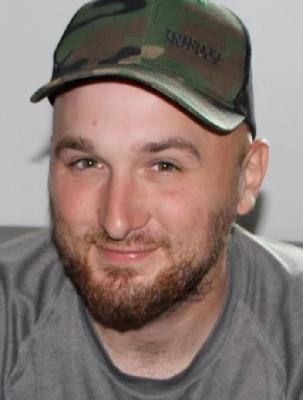
Travis Lee Craig, a 38-year-old White male, was killed on October 6, 2017, at the Lawrence County, Indiana, home where he lived with his wife, Debbie, their children, and another relative. Craig had been born in Bedford on July 10, 1979, the son of Marvin and Deloris Roberts Craig. He worked as a foreman and saw operator for Big Creek, LLC, and was remembered in his obituary as an avid hunter and fisherman as well as a devoted husband, father, and friend.
His death came at his residence late that Friday morning, and law-enforcement records later described what happened there as a homicide. The Lawrence County Sheriff’s Department began investigating the killing immediately.
The investigation quickly focused attention on the people who had access to the household and the firearms kept there. One of those individuals was Joseph M. Backenstoes, a cousin of Debbie Craig who had been living in the Craig residence since at least May 2017. According to a later Indiana Court of Appeals decision, detectives learned during the homicide investigation that Backenstoes was residing in the home with Travis, Debbie, and their children. Detective Phil Wigley interviewed Backenstoes at the sheriff’s department on the day Craig was killed. During that recorded interview, Backenstoes acknowledged that he had fired shotguns and several rifles at the Craig property. The court record does not describe that statement as a confession to Craig’s killing or say that Backenstoes admitted firing a weapon at Craig; it concerned his previous handling and firing of firearms at the property.
Investigators obtained a search warrant for the Craig residence and seized approximately twenty firearms. The following day, October 7, Detective Wigley learned that Backenstoes had previously been convicted in Louisiana of simple burglary of an inhabited dwelling. That earlier conviction was significant because Indiana law classified him as a serious violent felon and prohibited him from possessing firearms. What began as evidence gathered in the investigation of Craig’s homicide therefore led to a separate criminal case against Backenstoes.
On November 6, 2017, Indiana prosecutors formally charged Backenstoes with unlawful possession of a firearm by a serious violent felon, a Level 4 felony. His prosecution was directly connected to evidence uncovered while investigators were examining Craig’s death, but the charge itself was not a homicide charge. Backenstoes went to trial on the firearm case on March 27 and March 28, 2018. Prosecutors relied in part on his recorded interview, the firearms investigation, and certified Louisiana court records establishing his earlier felony conviction. The jury found him guilty. On April 26, 2018, the trial court sentenced him to ten years in the Indiana Department of Correction.
Backenstoes appealed, arguing that prosecutors had not adequately proven that he was the same person who had received the qualifying Louisiana conviction. The Indiana Court of Appeals rejected that argument on January 23, 2019. The appellate judges concluded that the identifying information in the Louisiana records, together with Detective Wigley’s testimony and other evidence, was sufficient to establish the prior conviction, and they affirmed Backenstoes’s firearm conviction and sentence. The appellate decision is particularly important to the history of Craig’s case because it preserves considerable detail about what investigators did immediately after the killing: Backenstoes was interviewed, the Craig residence was searched, roughly twenty firearms were taken into evidence, and his prohibited possession of firearms was uncovered.
Nothing in that appellate ruling, however, identifies Backenstoes as Craig’s killer or says prosecutors believed they could prove that he committed the homicide. His arrest, trial, conviction, and prison sentence were for unlawful firearm possession rather than murder, manslaughter, or another offense alleging responsibility for Craig’s death. The online records located for the case likewise do not show that Backenstoes was subsequently charged with killing Craig. His proximity to the victim, residence in the same household, access to firearms, interview during the homicide investigation, and resulting firearm prosecution made him an important figure in the investigation, but those circumstances should not be treated as proof that he was the shooter.
The available online material does not reveal a later arrest, murder indictment, homicide trial, or conviction of another person for Craig’s killing. Nor do the records located provide a publicly documented motive or a definitive account identifying who fired the fatal shots. What can be established is that Craig was killed at the home on October 6, investigators treated the death as a homicide, searched the property and examined the firearms there, and questioned a relative who was living in the residence. That investigation produced a substantial prison sentence for Backenstoes on an independent firearms offense, but the publicly available court record stops short of connecting that conviction to responsibility for Craig’s death. As a result, the central question of who killed Travis Lee Craig is not answered by the arrests and court proceedings that are publicly documented online.