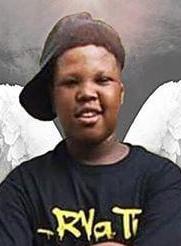
On the morning of October 8, 2007, Aarin A. Lambert, a 17-year-old male from Richmond, Virginia, was killed in the 900 block of West Ladies Mile Road. The details made public at the time were spare but stark: a young life ended by gunfire on a North Richmond street, another name added to a week that already felt unsteady and loud with violence.
His death came during what local reporting described as an abrupt spate of shootings across the city, the kind of stretch that leaves
neighborhoods listening harder for sirens and families calling one more time to make sure someone made it home. Richmond’s police chief at the time, Rodney D. Monroe, characterized the moment as an “unfortunate spike” that ran against the broader drop in crime the city had been seeing that year, a statement that sounded both reassuring and uneasy—because for the people living through it, the numbers didn’t matter as much as the new empty places at dinner tables.
In the online public record available today from the sources that mention Lambert’s killing, there are no named suspects, no described motive, and no publicly documented arrest tied to his death. The trail that can be followed from contemporaneous references and memorial-style listings points to the fact of the shooting and the location, but not to a courtroom, a conviction, or the kind of closure families beg for when the shock wears off and the questions begin.
Days later, his family gathered the way families do when there’s nothing else to hold onto but each other. His obituary listed those he left behind—his mother, Pamela J. Lambert; his father, Ronald Jenkins; siblings and extended family—and noted that funeral services were held at Chiles Funeral Home on Fairmount Avenue, with burial at Oakwood Cemetery. The announcement read like a ledger of love and kinship, names lined up as witnesses to a life that mattered, even if the public never learned the full story of how it was taken.
In the messages left after his obituary ran, friends wrote about a bright smile, about seeing him just a day before, about the way he joked in class and still pushed others to get the work done. One person remembered knowing him from Mosby Middle School; another wrote about how unreal it felt to accept that he was gone. It was the kind of grief that doesn’t arrive neatly—it spills out in fragments, in misspellings and rushes of feeling, in the raw insistence that someone was here, someone was loved, and someone should not have been lost this way.