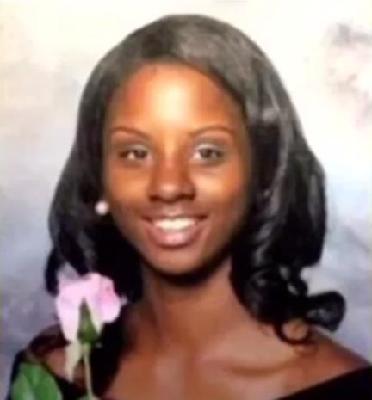
On the night of December 10, 1977, 33-year-old Karen P. Braunbeck Dodrill, a white female from Newark, Ohio, was celebrating her birthday at Forker's Café on Union Street. She had been born on the same date in 1944, and the evening out at the neighborhood bar was meant to mark that milestone quietly with friends. Public records and cemetery listings later recorded how that date, which should have been a simple celebration, would instead be remembered as both her birthday and the day her life
ended, with her burial arranged at Cedar Hill Cemetery in Newark.
Outside the café, winter had tightened its grip; the temperature hovered around minus four degrees Fahrenheit, and the streets around the back of the bar were hard and silent with ice. As closing time approached, Karen offered a ride home to her friend Joyce Vermillion, a 38-year-old barmaid finishing her shift at Forker's, so Joyce would not have to walk in the brutal cold. Around 2:30 a.m., after the bar had closed, Karen stepped out first to start and warm her car, then began walking back toward the rear entrance to fetch her friend. In the darkness near the back of the building, an unseen figure lay in wait. As Karen approached, the assailant opened fire with a. 22-caliber weapon, striking her repeatedly; moments later, as Joyce came outside, she too was gunned down. Their bodies were left in the snow near the rear door of the café, to be discovered later, frozen in the winter air, in what initially appeared to be a senseless double murder.
The killings shocked Newark and the surrounding communities, but in the first hours and days investigators had little to go on beyond scattered. 22-caliber shell casings and a crime scene offering no obvious motive. There were no witnesses to the ambush, no clear indication that the women had been targeted for anything other than a quick, brutal attack in the dark behind a small-town bar. As detectives struggled to understand why two women leaving work and a birthday celebration had been slaughtered, the slayings of Karen Dodrill and Joyce Vermillion briefly stood as a chilling but isolated atrocity.
In the months that followed, however, more. 22-caliber murders began to appear across central Ohio: families and individuals shot repeatedly in their homes or outside, scenes marked by overkill and robbery. Ballistics work by the state crime lab revealed that many of these killings, scattered across multiple counties, had been carried out with the same. 22-caliber pistol, and that in at least one case a second pistol of the same caliber had been used, proving more than one gunman was involved. When investigators revisited older unsolved files, they sent the bullets and casings from the December 10 double homicide in Newark for comparison. The tests confirmed that the same weapon used in later crimes had also killed Karen and Joyce, transforming what had seemed an isolated bar-lot shooting into the opening act of a serial murder spree that the press would soon label the work of the “.22-Caliber Killers.”
Before the ballistic link was made, detectives had briefly focused on another set of suspects. A woman named Claudia Yasko, who was mentally ill and under treatment, implicated herself and two men in the murders of Karen Dodrill and Joyce Vermillion. Based on her account, charges were filed, and for a time it appeared the case might be closed. When the laboratory results later showed that the same gun used in the Newark double homicide had also been used in murders committed while Yasko and the men she named were already in custody, the evidence exonerated them. The charges were dropped, and investigators were forced to confront the reality that the true killers were still free, moving across Ohio and leaving behind a growing trail of victims.
The real break in the case came nearly a year after Karen's death. On December 8, 1978, Gary James Lewingdon was detained in connection with the use of a credit card stolen from another murder victim, Joseph Annick. Brought into a police station in connection with what first appeared to be a financial crime, Gary began to cooperate under interrogation, admitting involvement in a series of. 22-caliber killings and pointing to his older brother, Thaddeus Charles Lewingdon, as his partner. Within days, Thaddeus was arrested. Searches of their homes turned up. 22-caliber pistols and stolen items tied back to several murder scenes, while further ballistic and fingerprint analysis strengthened the chain between the brothers and the pattern of killings that had begun behind Forker's Café.
When the case went to court, prosecutors portrayed the Lewingdon brothers as opportunistic killers who targeted strangers for robbery and shot them repeatedly with. 22-caliber weapons, starting with the ambush that killed Karen Dodrill and Joyce Vermillion on that freezing December night in Newark. In February 1979, Thaddeus faced trial first and was convicted of the murders of Vermillion, Dodrill, and Jenkins Jones, receiving three life sentences. Later that spring, he was tried again and given six additional life terms for other victims. In May 1979, Gary went before a jury on ten homicide counts; he was convicted on eight of them and sentenced to eight consecutive life sentences and a substantial fine. The brothers would spend the rest of their lives in prison, and over time their story became another entry in the grim catalog of American serial murderers, with Karen's name preserved in the record as the first life taken in their murderous campaign.
Today, the trail of documents, memorials, and true-crime accounts offers only brief glimpses of who Karen was beyond the few stark facts of birth, age, and place. Yet in each retelling of the. 22-caliber killings, the narrative returns to the same moment: a woman stepping out into bitter winter air after closing time, pausing to warm her car so a friend wouldn't have to walk home in the cold. The violence that followed would resonate throughout central Ohio for a year, but for Karen Dodrill, it unfolded in seconds on the night she turned thirty-three, sealing her story at the very point that it should have been opening into the rest of her life.