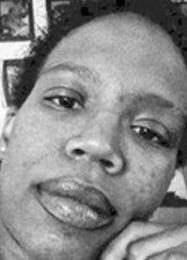
On November 23, 1997, the body of Yolanda Earp, a 30-year-old Black woman, was discovered in Newark, New Jersey. Her death became part of a disturbing series of murders that terrorized communities throughout Essex County during the 1990s. Between 1993 and 1998, at least fourteen women were killed in Newark, Irvington, and East Orange, prompting fears that a serial killer was targeting vulnerable women.
Yolanda's murder occurred during an especially troubling period, as investigators were already struggling to understand whether the killings were connected and who was responsible.
Yolanda's body was discovered just one day after another victim, Sharon Smith, was found dead inside a dumpster on November 22, 1997. The close timing of the discoveries added to concerns about the possibility of a serial murderer operating in the area. Although Yolanda was included among the victims investigated as part of the Essex County killings, publicly available accounts do not establish the precise location where her body was discovered, the injuries she sustained, or the specific circumstances surrounding her final hours. The broader investigation involved women who had been strangled, stabbed, or suffocated, but the available information does not conclusively identify which method was used in Yolanda's murder.
The killings had begun years earlier. On March 4, 1993, Diane Floyd was discovered murdered inside her apartment, becoming one of the earliest victims associated with the investigation. On April 4, 1997, Valerie Wilson was found dead in a vacant lot. Other women continued to disappear or turn up murdered, with the violence extending across several Essex County communities. By February 11, 1998, when Yvonne Lee was found murdered, investigators were examining a pattern of deaths that had claimed numerous lives and left families searching for answers.
Many of the victims were associated with prostitution, and investigators initially believed someone might be deliberately targeting women who worked on the streets. However, the available reporting does not independently establish Yolanda's personal circumstances or whether she was engaged in prostitution. The victims' circumstances made the investigation especially challenging, as detectives attempted to reconstruct their movements, identify potential witnesses, and determine whether the same individual had encountered multiple victims before their deaths.
The growing number of murders eventually prompted law enforcement officials to organize a coordinated investigation. Newark Police Director Joseph Santiago publicly expressed concern about the killings, and on March 31, 1998, Essex County Prosecutor Patricia A. Hurt established a special task force to investigate the deaths. Detectives examined at least fourteen murders, searching for similarities in the victims, locations, physical evidence, and methods of killing. Initially, the possibility of a serial murderer was considered seriously, particularly because so many victims appeared to share similar circumstances.
Investigators soon encountered significant complications. Although the victims had certain characteristics in common, the methods used to kill them varied considerably. Some had been strangled, others had been stabbed, and still others had died from suffocation. These differences raised questions about whether one offender was responsible for all the deaths or whether multiple killers had been operating independently. As the investigation progressed, authorities increasingly recognized that the murders might involve more than one perpetrator, complicating efforts to identify those responsible.
One individual who attracted investigative attention was Bharat Malde, a Roselle resident who was arrested on July 8, 1998. Malde had been identified by several women as a man who impersonated an undercover police officer to lure them into his vehicle. According to investigators, he transported women to isolated locations and sexually assaulted them. The incidents occurred between February and May 1998, and his conduct raised concerns that he might have been connected to some of the Essex County murders. In August 1998, Malde was publicly identified as a possible suspect in the broader homicide investigation.
Despite those suspicions, investigators were unable to establish sufficient evidence connecting Malde to the murders. In June 1999, he received a six-year prison sentence for offenses involving the abduction and sexual assault of women. That conviction did not resolve Yolanda's case, and there is no publicly verified evidence establishing that Malde was responsible for her death. His prosecution demonstrated that dangerous offenders were operating in the area, but it did not provide the answers investigators needed concerning the series of homicides.
Another significant development occurred on October 14, 1998, when authorities arrested Harrison Hogue, an Irvington resident, and charged him with the 1997 murder of Valerie Wilson. Hogue was reportedly known to women involved in prostitution in the area, and suspicions concerning his possible involvement in the killings had circulated before his arrest. Investigators also considered whether he might have been responsible for additional murders, although evidence connecting him to the other victims remained insufficient.
Hogue's prosecution encountered legal and psychiatric complications. Shortly after his arrest, he was found incompetent to stand trial in connection with Wilson's murder. Following psychiatric treatment and further evaluation, he was subsequently declared competent in January 1999. Nevertheless, available accounts indicate that prosecutors ultimately did not proceed with the murder case. No conviction resulted from the proceedings described in contemporary reporting, and no reliable information establishes Hogue's involvement in Yolanda Earp's death.
The arrests of Malde and Hogue represented important developments in the wider investigation, but neither established who murdered Yolanda. Authorities investigated several possible suspects as they worked to determine whether the killings were related. The possibility of a single serial killer gradually gave way to the recognition that multiple offenders might have been responsible for different deaths. This uncertainty made it difficult to connect individual suspects to specific victims, particularly when the physical evidence and circumstances surrounding the murders differed.
For Yolanda's family, the investigation represented a painful search for accountability amid a much larger tragedy. Her death was one of many that drew attention to the dangers faced by vulnerable women in Essex County. Although the investigation frequently focused on the victims' possible connections to prostitution, each woman had an individual identity and a life beyond the circumstances in which she died. Yolanda was more than a name in a series of homicide investigations, and the uncertainty surrounding her death remains an important part of her story.
Publicly available information does not identify anyone who has been convicted of Yolanda Earp's murder. Nor does it establish that either of the two prominent suspects investigated in connection with the broader Essex County killings was formally charged with her death. No verified public account located establishes a subsequent trial, conviction, or definitive resolution specifically concerning Yolanda.
Nearly three decades after Yolanda's body was discovered, the available public record continues to leave significant questions unanswered. Who encountered her before her death, what happened during her final hours, and whether her killer was responsible for other murders remain unresolved in the sources reviewed. Her death stands among the tragic cases associated with the Essex County homicide investigations of the 1990s, a period marked by fear, uncertainty, and the loss of numerous women whose families deserved answers. Until reliable evidence identifies the person responsible, Yolanda Earp's murder remains a case without a publicly documented resolution, and her story continues to reflect the lasting consequences of violence that has never been fully explained.