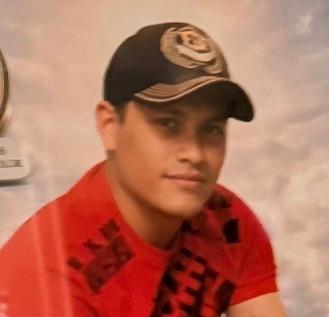
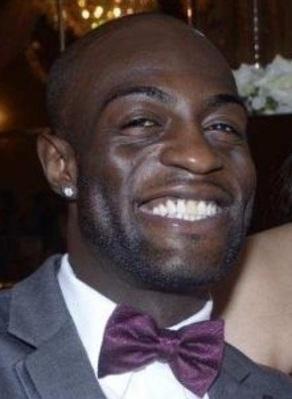
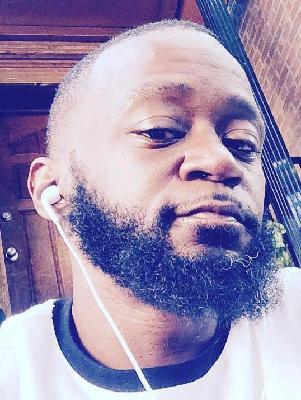
Willie Mae Stevenson, a 32-year-old male from Shrewsbury, New Jersey, was closely tied to the working communities of Monmouth County when his life ended in gunfire on June 23, 1982. That early summer day placed him not in his listed city of Shrewsbury, but in a house on Pension Hill Road in Manalapan, where personal and professional worlds intersected in a way that would leave two people dead and a wider circle of friends and coworkers stunned.
The Pension Hill Road home belonged to 37-year-old Richard Gorrell Jr., a well-known figure from New Brunswick's Black community, regarded by many as a gentle but determined organizer who worked with youth and neighborhood groups. Stevenson, for his part, was employed by the Monmouth County Educational Service Commission as a recruiter for the migrant workers program, a role that connected him with some of the county's most vulnerable laborers and required him to move between towns and agencies across the region.
In the background of that work, investigators later noted that Stevenson and Gorrell were more than casual acquaintances: they were believed to have lived together at one point, and over the year leading up to the shooting their relationship had been marked by conflict and arguments that those close to the case would later recall.
On the afternoon of June 23, 1982, the quiet of Pension Hill Road was broken inside the bedroom of that Manalapan house. When authorities arrived, they found Stevenson and Gorrell dead from gunshot wounds, the scene confined to the interior of the home. Monmouth County Prosecutor Alexander D. Lehrer later explained that the physical evidence pointed in a single, grim direction: Gorrell had shot Stevenson and then turned the weapon on himself, leaving no indication of a third person in the room and no sign that anyone else had been directly involved. With the suspected shooter dead at the scene, there were no arrests. The case was treated by investigators as an apparent murder–suicide, and the official narrative that emerged framed the deaths as a sudden eruption of lethal violence within an already strained personal relationship rather than a crime with unknown assailants still at large.
News of what had happened traveled quickly back to New Brunswick, where Gorrell was remembered as “Sensei,” a mentor whose karate classes, youth programs, and community work had, in the eyes of his colleagues, helped frail teenagers grow into confident young adults. Friends and associates later spoke of a man who had served on local boards, organized tournaments, and crossed racial and neighborhood lines in an effort to build bridges, making the violent end of both his life and Stevenson's feel almost incomprehensible to those who had depended on him. The shock in New Brunswick stood alongside the quieter grief among those who knew Stevenson through his work with migrant workers—a man whose job was to connect people with opportunity, now reduced in official records to a name, an age, and a date of death, his story largely overshadowed by the public profile of the man who killed him.
Decades later, the bare facts of the case continue to live on mainly in digital fragments: a brief entry noting that Stevenson was “lost to gun violence” in Shrewsbury on June 23, 1982, and a modern case summary that categorizes his death as “death by force” and repeats the prosecutor's conclusion that he was shot in Gorrell's Pension Hill Road bedroom before the gunman took his own life. On an online forum attached to the case, contributors still wonder what might have driven a respected community leader to such an act, acknowledging that many rumors circulate but that the essential mystery of motive remains unresolved. What has not changed, however, is the official outline: there were no other named suspects, no subsequent arrests, and no alternate theory of the crime that displaced the original finding of murder–suicide. For Stevenson, the story that survives is thus stark and finite—a working man whose path crossed too closely with someone he knew, ending in a locked-room tragedy that left loved ones and communities to absorb both grief and unanswered questions long after the police had closed their files.