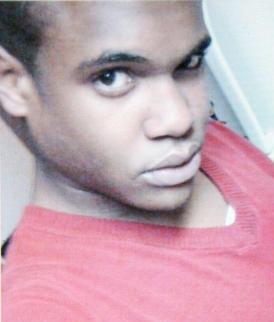
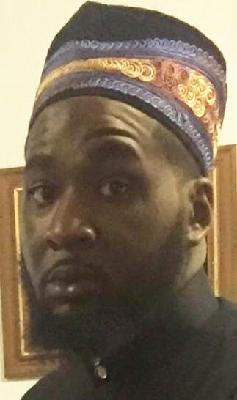
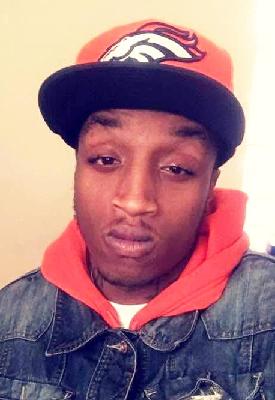
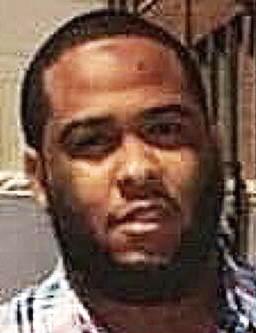
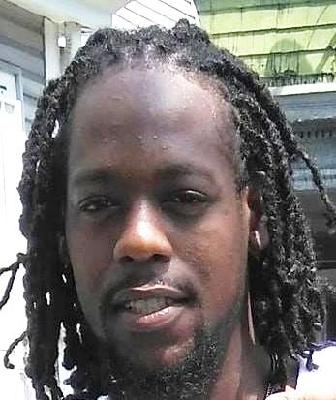
Shane A. Rouse, a Black / African American man from Newark, New Jersey, stepped into the late hours of Sunday, October 7, 2018, unaware that the night would end in sudden, lethal violence on a neighborhood block he knew well. In the overnight hours of Sunday into Monday, reports of gunfire shattered the quiet along the 400 block of South 15th Street, drawing police to a scene where they found him lying on the street, bleeding heavily from a gunshot wound to the head.
Emergency personnel pronounced him dead there, and his death was immediately classified as a homicide, another life added to Newark’s toll of gun violence.
Witness accounts reported in local news described a lone attacker emerging out of the darkness, dressed in all black and wearing a mask, approaching the victim at close range. The gunman, armed and deliberate, fired at point-blank range before disappearing back into the night, leaving no immediate clue beyond the echo of shots and the shell casings on the pavement. The Essex County Prosecutor’s Office Major Crimes Unit took over the investigation, treating the shooting as a targeted killing rather than a random act, but in those first hours authorities released little information beyond the basic facts that a man had been shot in the head and died where he fell.
For more than a week, the man on South 15th Street remained unnamed in official channels, even as word spread quietly through the neighborhood about who he was. On October 16, 2018, local reporting identified him as Newark resident Shane A. Rouse, with family and friends preparing to lay him to rest that very day at Cotton’s Funeral Home in the city’s South Ward. The coverage painted a picture of a community reeling from the brutality of his death and gathering to say goodbye, even as investigators still had not announced any arrest or clear motive. Online memorials later created in his name filled with candles, comments, and tributes that remembered him as “Baby Shane,” an outgoing man and a father of three girls, underscoring the quiet, everyday life that had been interrupted by a masked gunman on an ordinary Newark street.
Publicly, the case appeared to stall: updates reiterated that no suspect had been taken into custody for the killing, and his name eventually migrated into databases and advocacy sites that track unsolved homicides and gun-violence victims. Behind the scenes, however, investigators were pursuing leads. According to a later appellate court opinion, Newark detectives came to suspect that a man named Sharod Massey might be connected to the shooting, though he was never charged with any offense related to Rouse’s death itself. On November 16, 2018, Detective Ramon Candelaria obtained warrants to search Massey’s Newark apartment and his 2001 Ford Explorer for ballistic and cellular evidence linked to the murder. When the warrants were executed four days later, officers found a safe in a bedroom closet; after securing a separate warrant to open it, they discovered two handguns inside, along with paperwork tying the safe to Massey.
Laboratory testing later showed that one of those guns was a ballistics match to the weapon used to kill Shane Rouse. Rather than charging Massey with homicide, prosecutors pursued firearms offenses, indicting him on two counts of second-degree possession of a weapon by a certain person not to have weapons and on a charge involving a defaced handgun, all rooted in the guns recovered during the Rouse murder investigation. At trial, jurors heard that he admitted purchasing and possessing the handguns; he was convicted on the weapons counts, and in 2020 received a lengthy prison sentence, later partially adjusted on appeal when a higher court vacated his extended-term sentence but left the convictions intact. The appellate judges noted explicitly that, although police suspected Massey in connection with the killing on South 15th Street, he was never charged in relation to Rouse’s death.
Years later, case summaries and forums dedicated to unsolved homicides still list Shane A. Rouse’s killing as an open question, emphasizing that, despite the recovery of the murder weapon and the successful prosecution of a man for possessing it, no one has been formally accused in court of pulling the trigger that night. In these accounts, his story is told in two intertwined strands: the stark, unresolved violence of a masked shooter firing at close range on a Newark sidewalk, and the quieter legacy preserved by those who light digital candles and write about a man they loved and lost, still waiting for a day when someone is held accountable for his death.