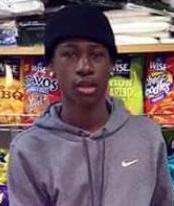
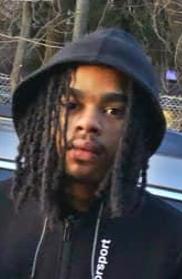
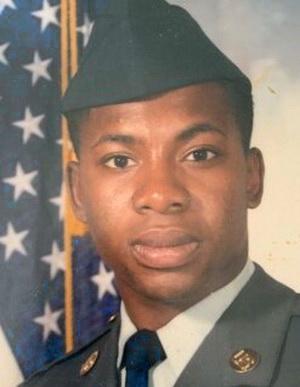
Leroy Davis, a 31-year-old Black / African American man from Trenton, New Jersey, stepped into the early hours of Saturday, April 9, 2022, unaware that the city’s growing tide of gun violence was tightening around him. In the darkness just before 2 a.m., a sudden burst of gunfire shattered the quiet around Perry Street and North Montgomery Street, a mixed residential and commercial corridor not far from the center of the capital city.
Acoustic gunshot-detection sensors used by Trenton registered roughly twenty shots in rapid succession in that small stretch of road, a volume of fire that suggested not a single warning shot but a focused, deadly barrage.
Within moments, ShotSpotter alerts and frantic 911 calls began to converge on the same location. Officers responding to the activations found Davis lying on the sidewalk in front of 205 Perry Street, gravely wounded, his body bearing multiple gunshot impacts from the hail of bullets that had just torn through the block. Trenton EMS crews reported him in traumatic arrest as they worked to stabilize him at the scene, then rushed him to Capital Health Regional Medical Center with paramedics continuing desperate efforts to revive him along the way. Despite those efforts, doctors at the hospital pronounced him dead in the early morning hours, marking the end of his life before most of the city had even woken up to the news.
His killing came at a moment when Trenton was already straining under an alarming pattern of deadly violence. Local tallies at the time counted Davis’s death among the city’s first ten homicides of 2022, with one outlet identifying him as the ninth person murdered that year and others listing the case as the eighth, a small numerical discrepancy that nonetheless underscored how quickly the count was climbing. Commentary in those reports noted that Trenton had recorded forty homicides in each of the previous two years, and yet by early April 2022 the city had already reached a pace that outstripped those historically bloody years. Davis’s death, recorded at the intersection of Perry Street and North Montgomery Street, became another datapoint in a running ledger of shootings that residents were watching with growing fear and fatigue.
Behind the crime statistics, however, was a man whose absence left a tangible void. Online memorial pages dedicated to Davis show a contributed photograph, a listed nickname, “Yasin,” and space where loved ones have added personal details about his life. Dozens upon dozens of virtual candles have been lit in his memory, with comments from those grieving him referring to the pain of losing a son and the struggle of navigating life after such a sudden, violent loss. Later descriptions in a true-crime account would refer to him as a father and frame his killing as emblematic of the burden that repeated shootings place on families and neighborhoods in Trenton, suggesting that his story was not only about a single night on Perry Street but also about the wider crisis of violence enveloping the city.
On the investigative side, the Mercer County Homicide Task Force and the Trenton Police Department took the lead in the case, treating the shooting as a homicide and appealing for information from anyone who might have seen or heard something in those dark early-morning minutes. Yet reports accessible in the years that followed continue to speak of the killing in the present tense of an open case rather than in the past tense of one that has been solved. Crime case-tracking sites describe how Davis was gunned down near Perry and Montgomery, note the approximate twenty rounds detected by the city’s sensor system, and then trail off into a request for updates, indicating that no closure has yet been recorded in public sources. A local anti-violence group in Mercer County marked the anniversary of his death by posting his name, the date, and his age alongside a single stark label—“Unsolved case”—a public reminder that, for his family, there has been grief without resolution.
As of the most recent online updates, there is no public record of anyone being arrested or charged for the shooting that took Davis’s life, and no suspect or suspects have been formally named in open sources. His story now lives in news archives, on memorial websites, in community remembrance posts, and in a later book that uses his killing to illustrate Trenton’s descent into repeated cycles of gunfire. Together, those fragments sketch the outline of a man whose final moments were spent on a cold city sidewalk under a storm of bullets, and whose case still waits, years later, for someone to step forward with the information needed to transform an unsolved homicide into a resolved one.