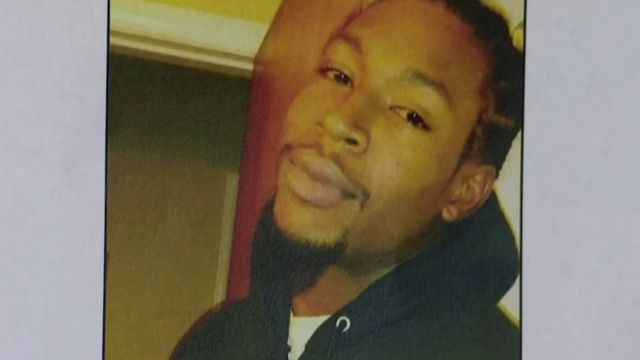
For nearly three decades, Scott James Larkins, a White / Caucasian male, lived with the devastating consequences of a violent ambush that ended his police career. A dedicated officer with the Detroit Police Department for seven years, he was remembered by his wife, Sharon Anne, as a "good father, a good husband, and a good officer." He served in the department's Harbormaster Section, combining his duty with a love for the water. At the time of the attack, he was a young man, approximately 28 years old, with a wife and a growing family that would eventually include seven children.
The night that irrevocably changed his life was Sunday, November 5, 1978. Officer Larkins and his partner, Officer Rick Savin, were leaving a Big Boy restaurant at 7033 East Jefferson Boulevard after a meal. As they walked back toward their patrol car, they were ambushed by shotgun blasts fired from a second-story window of a neighboring hotel. Both officers were struck in the back.
The sudden, unprovoked attack was a harrowing ordeal. Sharon Anne Larkins later recalled the moment she learned the news, seeing the gold badge of the visiting officers at her door. "I knew right then and there it was something," she said. "I just opened up the door and asked if he was still alive."
The Detroit Police Department responded swiftly, and the shooter was apprehended just two hours later. The investigation revealed the gunman had a history of mental illness and harbored a deep-seated grudge against police officers, which he attributed to prior commitments to mental institutions. He was charged with assault with intent to murder. Following legal proceedings, a court found the man not guilty by reason of insanity, and he was committed to a state institution for psychiatric treatment.
The shotgun blast inflicted grievous and permanent injuries upon Officer Larkins. The damage was so severe that he was forced to take a medical retirement from the police force in 1982, ending the career he loved. For the next 29 years, he endured the chronic pain and complications stemming from that single moment of violence. His quality of life was forever diminished, a reality his family witnessed every day. On March 9, 2008, at the age of 58, Scott James Larkins succumbed to the long-term effects of his gunshot wound. A medical examiner noted that homicide could not be excluded as a contributing factor to his death.
For years after his death, Officer Larkins' sacrifice was not formally recognized on a national level. The journey to correct this began with his grandson, Jacob, who, while applying for a scholarship from the Collin Rose Memorial Foundation, wrote a powerful essay about his grandfather's life and the shooting that ultimately led to his death. The essay captured the attention of Wayne State University Police Detective Chris Powell, the foundation's president. Intrigued, Detective Powell searched the National Law Enforcement Officers Memorial database and found Larkins' name was missing.
Detective Powell launched an effort to have Officer Larkins' death classified as a line-of-duty death. He gathered medical records, old newspaper articles, and other official documents and presented the case for recognition. The effort was successful, and in September 2019, the National Law Enforcement Officers Memorial approved the inclusion of his name. "I'm proud of my husband," Sharon Anne said upon hearing the news. "And I'm glad he's being recognized. I really am. He deserved it."
In May 2020, the Detroit Police Department held a memorial tribute honoring its fallen heroes, where Officer Scott Larkins was remembered for his service and sacrifice. His name was formally added to the National Law Enforcement Officers Memorial wall in Washington, D.C., ensuring his story of bravery and endurance would not be forgotten. His name is also etched on the Michigan Fallen Heroes Memorial wall in Pontiac. The case is considered closed as the perpetrator was identified and institutionalized.