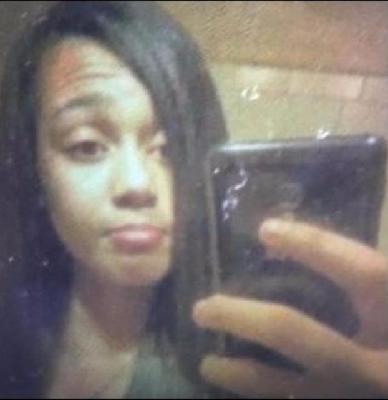
Deashia Gilkey, a woman from Detroit, Michigan, was found dead on the night of February 4, 2022, after firefighters were sent to what initially sounded like a routine call: a “building fire” on the city’s east side near Young Street and Chalmers Street. When crews arrived just after 8:30 p.m., they saw a vehicle burning in the driveway of a house they believed was vacant.
Once the flames were knocked down, two bodies were discovered inside the burned-out vehicle, described as burned beyond recognition, and the scene immediately shifted from fire response to homicide investigation.
As detectives worked backward from the charred car, police said the story of that night was tied to another violent incident earlier the same day in Farmington Hills. Just before 6 p.m., a man reported being shot during an attempted robbery at the Fairmont Park Apartments near 9 Mile Road and Drake Road. According to the report, four masked suspects—believed to be three men and one woman—tried to rob him; when he refused to comply, he was shot, and the group fled in a silver Ford Fusion with rear-end damage and dark tinted windows.
Investigators later said Gilkey was also known as Deashia Adolphus-Young, and they believed she had been involved in that Farmington Hills robbery alongside her cousin, Jeremy Taylor. Police said another man and Gilkey’s girlfriend were present as well, but the girlfriend was characterized by a Detroit police lieutenant as “a completely innocent victim,” caught in the wrong place at the wrong time. After the robbery, police said Gilkey became anxious and wanted to go to police about what had happened—an intention investigators believe put her in immediate danger.
According to Detroit police, the killings were meant to silence her. Investigators said Gilkey and her girlfriend were shot at another location near a relative’s house, then placed into a vehicle and transported across the city. The car was ultimately set on fire at the Young Street location, turning a double homicide into a grisly attempt to erase evidence and identities in smoke and heat. A neighbor near the scene later described feeling a sudden shake just before the fire, an eerie jolt that—without her knowing it—matched the violence police would soon uncover.
Police said technology and human testimony helped pull the case back out of the ashes: license plate readers and ShotSpotter data were used to piece together movements, and a family member provided information that investigators said helped explain what happened. Detectives tracked Jeremy Taylor to Lexington, Kentucky, where they said they gathered additional evidence and interviewed him before he was extradited back to Michigan. The reporting did not include the final court disposition, but police described the case as one they were able to “close” with Taylor identified as the suspect.