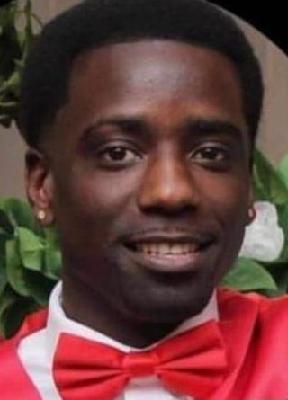
George Lee Wright was a 36-year-old man from Jackson, Mississippi, whose brief visit home ended in a killing that left his family and neighborhood shattered. On the night of May 26, 2015, he returned to the west Jackson neighborhood near Jackson State University to see his father, driving along Deer Park Street, a residential road that runs just across from the campus.
Sometime that night, gunfire erupted. Family members later discovered Wright lying on the pavement near his truck on Deer Park Street, gravely wounded and surrounded by the chaos of a crime scene that had appeared in an instant. Investigators counted at least seven spent shell casings scattered near his body, evidence of a barrage rather than a single shot. Relatives would later recall that he had been shot in the mouth, head, and neck, injuries so catastrophic that a cousin who finally rushed down the street could do nothing but watch as he struggled for life and then took his last breath in front of her.
Jackson police treated the scene as a homicide from the outset, closing off the area and beginning the familiar, painstaking routine of interviews and evidence collection near the edge of the university campus. Officers canvassed the neighborhood and spoke with Wright’s family, trying to piece together who might have wanted to ambush a man who, according to relatives, was simply coming home to visit his father. Yet almost immediately, the investigation ran into a wall: within a day of the shooting, police acknowledged publicly that they had not arrested anyone and did not even have a suspect to name, making clear that there were no strong leads to follow.
As time passed, Deer Park Street continued to appear in local crime reports for other shootings and killings, some of which led to swift arrests and murder charges, underscoring how violence repeatedly returned to the same stretch of road. But for George Wright’s family, there was no similar moment of resolution. No later news reports have documented an arrest, criminal charge, or trial connected to his death; the public record contains only the early descriptions of the crime, the brief obituary noting his age and date of death, and his inclusion among Americans lost to gun violence on that day. In the absence of any announced suspect or confession, his killing appears to remain officially unsolved, leaving loved ones with memories of a final, desperate scene on a quiet Jackson street and unanswered questions about the person who opened fire on him that night.