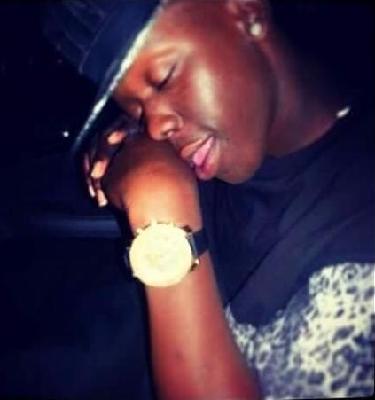
On Sunday evening, March 6, 2016, 21-year-old Samuel Davis, a Black man from Jackson, Mississippi, was on Fontaine Avenue near the intersection with Eminence Row in the Virden Addition as a weekend of violence in the city came to a head. Around 5:43 p.m., police later said, an argument that had been brewing along the street escalated into a confrontation involving multiple people, several of them armed, in the middle of a residential block not far from Lake Hico.
According to investigators, Davis became embroiled in an altercation with several individuals on Fontaine Avenue; witnesses and police described people on both sides of the dispute carrying different types of weapons. What began as a street argument turned into a shootout, with rounds fired back and forth across the pavement. When Jackson police officers arrived, they found shell casings scattered across the roadway—more than forty by one account—and Davis lying in the street, shot multiple times and pronounced dead at the scene, while another man who had been hit was rushed to the University of Mississippi Medical Center in stable condition. A handgun that detectives believed was involved in the exchange was recovered from Davis’s body, reinforcing their view that he was both a victim and an active participant in the gunfire that erupted on Fontaine.
The chaos spilled beyond the immediate corner. As officers worked the crime scene, a call came in about a traffic accident on Bailey Avenue near Mayes Street, some distance away. There they found a white vehicle driven by 51-year-old Janice Grayer, who had collided with another car. It quickly became clear that Grayer’s crash was not a simple roadway mishap: she had been shot once in the upper torso while sitting in her car near Fontaine Avenue and, gravely wounded, had tried to drive herself toward help before losing control and wrecking. She was taken to the University of Mississippi Medical Center and pronounced dead shortly after arrival. Police emphasized that Grayer had not been part of the altercation on Fontaine; she was described as an innocent bystander caught in the crossfire of the street gunfight that killed Davis.
In the days that followed, the killing of Davis and Grayer was woven into a broader narrative of a “crisis weekend” in Jackson, where five people were slain in roughly twenty-four hours. City leaders and residents spoke of neighborhoods where young men carried guns as a matter of survival, and where trust in law enforcement was thin. Friends remembered Davis as “Sammy,” a familiar face from the Washington Addition who had gravitated toward a group of young men trying to steer themselves away from deeper trouble, even as their lives remained surrounded by violence. After his death, some of those friends wore black T-shirts printed with a tribute to him and praying hands, gathering in parks and on corners to mourn one of their own while struggling with the reality that he had died in the very kind of shootout they all feared.
For detectives, the case quickly became a test of how much the community was willing to share. Early statements from Jackson police said that people believed to have knowledge of the shooting were detained and questioned, but no one was charged. Officers appealed for tips, publicly releasing a detailed account of the sequence of events and noting that many people had been out on Fontaine Avenue when the gunfire started, even though few were willing to come forward. News reports quoted Police Chief Lee Vance describing the incident bluntly as a shootout in the middle of a Jackson street, and a later crime-statistics briefing underscored that Davis’s case stood apart from other recent homicides: by mid-March 2016, the department said it had made arrests in all of the recent killings except the Fontaine Avenue shootings, which remained open even as investigators said they had “strong leads.”
Public records and subsequent reporting do not show that the investigation ever resulted in publicly announced arrests, formal charges, trials, or convictions for the deaths of Samuel Davis and Janice Grayer. The case continued to be referenced as an unsolved shooting on Fontaine Avenue, with authorities periodically reminding residents that an anonymous tip to Crime Stoppers or a call to detectives could help close a double homicide that had begun with an argument in the street and ended with two lives lost—one of them a young man who died where the bullets fell, the other a woman who tried to outrun her wounds and never made it to the hospital on her own.