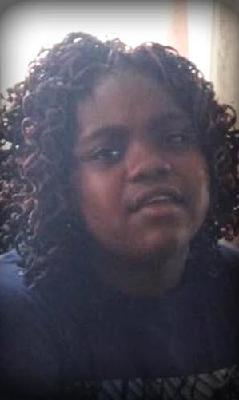
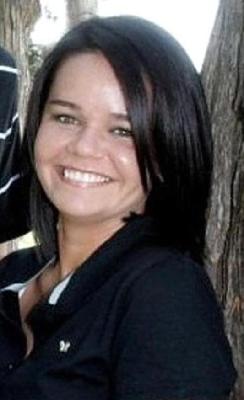
Roxy Lynn Gast Murison, also known in records as Roxanne Lynn “Roxy” Gastman Murison Tromm Ruddell and Roxanne Ruddell, was a 37-year-old White woman whose life traced a long path from the Pacific Northwest to the plains of Oklahoma. Born on October 11, 1956, in Cottage Grove, Oregon, she was the daughter of Raymond Gastman and Vera Cruz and was later raised by foster parents Clelland and Evelyn Bland in California. As an adult she built a family of her own, marrying truck driver Eddie D.
Ruddell in Oklahoma City in November 1992 and co-driving with him before settling into work as a security guard at Lake Stanley Draper on the southeast side of the city. Outside of work she was known for her deep love of animals, especially horses she raised throughout her life, and she enjoyed the quiet of the outdoors, where fishing became one of her favorite ways to unwind.
On the evening of September 3, 1994, Roxy went to Lake Stanley Draper off-duty, bringing her fishing gear to one of the quiet points along the shoreline. The lake, usually a place of routine and familiarity, was also the route chosen by two strangers passing through Oklahoma in a stolen car. Lewis Eugene Gilbert II and his 16-year-old accomplice, Eric Alvin Elliot, had arrived in the state in the midst of a violent interstate crime spree that had already left victims in Ohio and Missouri. Driving a car taken from an elderly couple they had killed in Missouri, they pulled into the area near Point 6 at the lake and noticed Roxy fishing alone with her pickup truck parked nearby, an easy target in their eyes.
The men decided to rob her and take her vehicle. They approached and struck up a conversation that lasted several minutes, long enough for Roxy to sense their intentions and offer them her truck if they would just leave her unharmed. In later court records, Gilbert’s own confession describes how Roxy promised not to call the police if they simply took the pickup and went, a plea that was ultimately dismissed by the man holding the gun. The two bound her hands, forced her to walk a short distance from the water’s edge, and made her sit at the base of a tree where the trunk split into a “V.” There, Gilbert raised the weapon and shot her in the head multiple times, leaving her slumped at the tree while he and Elliot fled the area in her truck, along with a small amount of cash taken from her.
Roxy’s body was discovered near that lakeside point the next day, still at the base of the tree where she had been forced to sit. Investigators quickly linked the crime scene to the broader trail of violence that had begun days earlier. The car used by Gilbert and Elliot to reach Oklahoma was identified as the vehicle stolen from William and Flossie Brewer, the elderly couple murdered in Missouri, and the chain of stolen vehicles connected the lake killing back to an earlier homicide in Ohio. Law-enforcement agencies in several states coordinated a manhunt, tracking the suspects westward as reports circulated about two men traveling in stolen vehicles and leaving death behind them.
Within roughly three days of Roxy’s murder, the search ended in New Mexico, where officers found Gilbert and Elliot asleep in a ditch. Nearby, authorities recovered Roxy’s pickup truck, abandoned less than a mile away. Extradition proceedings followed, with Oklahoma officials seeking to bring both suspects back to face charges in the killing at Lake Stanley Draper, while Missouri and Ohio also had claims arising from their own unsolved homicides. Ultimately, Oklahoma secured custody for trial in the death of Roxy Ruddell, pursuing not only the murder but also related counts of kidnapping and robbery with firearms.
In November 1995, Gilbert went to trial in Cleveland County, Oklahoma, for Roxy’s murder. Prosecutors laid out the sequence of the crime spree and focused on his actions at the lake, emphasizing his confession that he personally pulled the trigger as she sat under the tree. The jury convicted him of first-degree malice aforethought murder, kidnapping, and robbery with firearms, and recommended a death sentence for the murder along with life terms and fines on the other counts. The trial judge formally imposed those sentences in early 1996. Elliot, tried separately, ultimately pleaded guilty to first-degree murder in a later proceeding and was sentenced to life in prison without the possibility of parole, sparing him the death penalty but ensuring he would never be released.
Over the years that followed, Gilbert’s case moved through the appellate courts, with state and federal judges reviewing claims about his trial, sentencing, and mental state. None of those appeals succeeded. In 2003, after the last legal challenges were exhausted, Oklahoma set an execution date. On July 1 of that year, Gilbert was executed by lethal injection at the Oklahoma State Penitentiary, his death sentence carried out roughly nine years after the night he confronted Roxy on the lakeshore. Family members of Roxy and of the Missouri victims attended the execution, witnesses to the final legal consequence of the spree that had taken her life.
For Roxy’s family, friends, and former coworkers, the legal resolution did not erase the loss. Obituary records and memorial pages describe a woman who loved horses, who had built a home with her husband in Oklahoma City, and who balanced the hard work of trucking and security shifts with the simple joy of time spent outdoors and with her children. Online memorials and case listings remember her as a victim of gun violence whose name is tied to a notorious crime spree, but behind that label is the story of a life rooted in family, work, and quiet pleasures, cut short in a place that had once been part of her everyday routine.