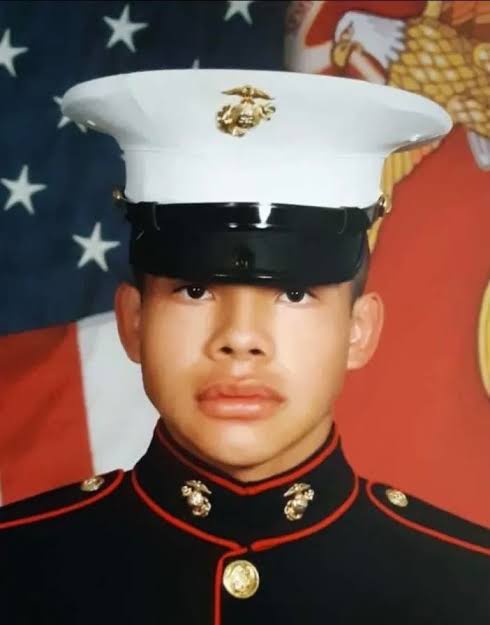
Christopher Curry was a 31-year-old Black / African American man from Oklahoma City who spent his life at the center of a close-knit family, known for a big laugh, an even bigger heart, and deep devotion to his five children. On the night of October 19, 2015, he was outside his grandmother’s home in the 1600 block of Meyers Place, a place the family regarded as a safe haven.
What should have been an ordinary evening in a familiar neighborhood instead fractured the sense of security that surrounded that house, leaving his mother, Chantal Curry, and the rest of the family facing a loss they later described as almost impossible to process.
Late that night, around 11:10 p.m., police were called to reports of a shooting on Meyers Place. Officers arrived to find Curry lying in the front yard of a residence at 1613 Meyers Place, gravely wounded from gunfire. Emergency crews could do nothing; he was pronounced dead at the scene. His killing became one of a flurry of homicides that gripped Oklahoma City over those days, officially recorded as the city’s 71st homicide of 2015, a statistic that reduced a beloved son and father to a number in a year of violence.
Detectives quickly began piecing together what had happened on that quiet block. Within days, investigators publicly identified 28-year-old Marquis Dwon Major as the suspect in the shooting and obtained a warrant for his arrest on a first-degree murder complaint. According to later case summaries, Major was not a stranger to the family; he had been a friend of Curry’s and was often around the household and children, a familiarity that deepened the family’s sense of betrayal as they tried to understand how someone from their own circle could be linked to the killing.
For several months after the shooting, Major remained wanted while the warrant was active. That changed on January 20, 2016, when officers located him at a home in the 3200 block of South St. Clair Avenue in Oklahoma City. He was arrested there on the outstanding first-degree murder warrant connected to Curry’s death and booked into the Oklahoma County Jail on a first-degree murder complaint. Gun violence records list him as unharmed and arrested in connection with the case, marking the transition of the investigation from an unsolved homicide to one with a named suspect in custody.
In the years since, online memorials and case profiles have preserved Curry’s memory more vividly than any formal court document. On remembrance pages, candles are lit for him and brief reflections sketch a portrait of a joyful presence whose absence reshaped daily life for his children and extended family. Case summaries note his mother’s ongoing struggle with grief and the difficulty of adjusting to a world in which the yard outside his grandmother’s home is forever associated with sirens and police lights. Discussion threads linked to the case reflect lingering questions about motive and, in the eyes of some family followers, whether anyone beyond Major might have been involved, with commenters remarking on the lack of a clearly stated motive in the public record. At the same time, widely accessible reports focus primarily on the night of the shooting, the identification of Major, and his eventual arrest, leaving the final legal resolution of the case largely outside the spotlight while Curry’s loved ones continue to carry the weight of his absence.