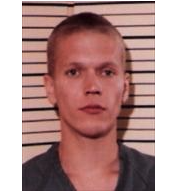
Michael Fisher, a 42-year-old male from Tulsa, Oklahoma, spent his final days living at the Woodland Hills Apartments, a large complex near Woodland Hills Mall on the city’s south side. On the afternoon of May 14, 2016, what began as an ordinary Saturday turned into tragedy when gunfire erupted inside one of the units. Fisher, who lived in the complex, was shot and killed inside an apartment that was not his own but was located within the same property, and a woman inside the unit was struck
in the neck by a bullet. She survived her wounds and was rushed to the hospital, where she was able to give investigators limited information despite her injuries.
Police arrived to a chaotic and unsettling scene. It was just after 4 p.m., broad daylight, when residents heard the shots and watched patrol cars and ambulances flood the area. Detectives quickly noted signs of a break-in at the apartment and made it clear they did not believe the shooting was random. Inside, investigators found drugs and drug paraphernalia, details that pushed them toward the belief that the violence was tied to the drug trade rather than a crime of opportunity. Neighbors, interviewed that evening, spoke of their unease, saying that while trouble at the complex was not unheard of, seeing a man killed and a woman gravely injured so close to their own front doors felt different and frightening. By that night, the case had already been counted as Tulsa’s 21st homicide of the year.
As detectives pieced together what had happened, a clearer picture of the relationship between Fisher and the suspected gunman began to emerge. Fisher had allowed an acquaintance, Jason Anthony, to stay in his apartment before the shooting. Anthony, known in the area by the nickname “Shaky,” had a reputation as a drug dealer in the neighborhood. According to police, the deadly confrontation grew out of a dispute over stolen drugs or money, a conflict that spilled from Fisher’s life into the borrowed apartment where he was ultimately shot. Even as they worked the scene, homicide investigators publicly named Anthony, then 40 years old, as the man they believed responsible, warning that he was armed, dangerous, and still at large.
In the days that followed, officers and detectives fanned out across Tulsa searching for Anthony, while local news stations carried his name and face, repeating police appeals for tips from the public. Witness accounts and early statements from the surviving woman suggested that victim and suspect knew each other, reinforcing investigators’ belief that this was a targeted act born out of a souring, drug-fueled association rather than a random home invasion. The Woodland Hills complex, already known to some residents for past violence, became a symbol in news coverage of how disputes over narcotics could explode into deadly force in otherwise ordinary apartment communities.
Ten days after the shooting, the search for the suspect came to an end on the east side of the city. On May 24, 2016, officers located Jason “Shaky” Anthony near 12th Street and Mingo Avenue and took him into custody without further bloodshed. He was booked into the Tulsa County Jail on a slate of serious charges: first-degree murder in the killing of Michael Fisher, shooting with intent to kill in connection with the woman wounded in the neck, first-degree burglary tied to the break-in at the apartment, and feloniously pointing a firearm. Public records and later summaries of the case consistently describe Anthony as the lone suspect and the man formally arrested for Fisher’s death, while noting that the woman who survived continued her recovery after the shooting.
Years later, Fisher’s killing is still remembered in brief but stark entries in crime databases and neighborhood-history sites: a fatal double shooting at 8626 East 67th Street, one man dead, one woman injured, and a suspect arrested and charged. Those summaries capture the bare facts of a life ended in an apartment that wasn’t his own, in the middle of a dispute that spiraled beyond control, leaving behind a grieving circle of family and friends and a community that watched a familiar complex turn into the scene of a deadly confrontation.