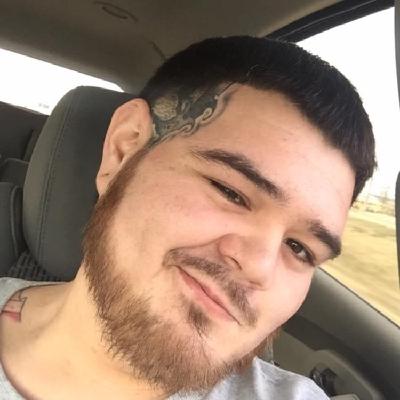
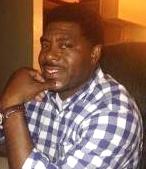
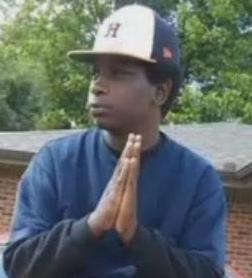
Raul Andres Fraire-Valdonvinos was an 18-year-old male from Oklahoma City, Oklahoma, known to his family as “Andy,” to some friends as “Ralphie,” and to his teachers simply as Raul. He was born on December 17, 2003, and grew up surrounded by a large, close-knit family, the son of Raul Fraire Puentas and Alondra Valdovinos Gonzalez. Relatives remember him as a happy child who was always smiling, a young man who loved spending time with his brothers, cousins, aunts, uncles, and especially
his grandparents. He played soccer and basketball, talked easily with adults, and was described as outgoing and respectful, someone who “knew no strangers.” During high school he attended both Capitol Hill High School and Emerson High School in Oklahoma City Public Schools, becoming involved in leadership at school and working for his uncle, Sergio Diaz, while dreaming of becoming a successful entrepreneur after finishing his diploma.
On the evening of Sunday, April 3, 2022, Raul was driving in Moore, just south of Oklahoma City, when everything that he and his family imagined for his future was violently cut short. Around 10:30 p.m., police were called to a crash near the intersection of Northwest 26th Street and North Santa Fe Avenue, where a vehicle had left the roadway and struck utility infrastructure. Officers arriving on scene found Raul in the crashed car. At first, the incident appeared to be a traffic accident, the kind of late-night wreck that happens in a moment of bad luck on an otherwise ordinary day.
Within a short time, however, it became clear that the crash was only part of the story. Investigators discovered that Raul had been shot before the collision; he had suffered a gunshot wound that, according to his family’s later account, struck him in the chest while he was sitting in his car. After he was shot, the vehicle continued on and crashed, hitting a power pole, and Raul died at the scene. The case that had begun as a possible traffic fatality was reclassified as a homicide, and Moore police issued public appeals for information, asking anyone who knew what had happened that night to call the department’s criminal investigations tip line.
In the weeks and months that followed, Raul’s family tried to piece together his last moments while also telling the world who he had been in life. His obituary and online memorials describe a teenager who loved watching the Mexico national soccer team and the Oklahoma City Thunder on television, shooting hoops in a driveway, and eating out with his younger brothers. He listened to NBA YoungBoy in his car, talked about securing a better financial future, and looked forward to finishing high school before launching into adulthood. To his aunt, who later wrote publicly about his death, he was more than a victim in a case file; he was a nephew who had been building relationships at school and at work, a teenager growing into his responsibilities and ambitions when violence found him.
As detectives dug into what had happened on April 3, the narrative shifted again, this time from a mysterious ambush to a planned act involving other teenagers. Raul’s aunt wrote that on the night he was killed, he was sitting in his car when a 15-year-old male high school freshman shot him in the chest. Two other teenage males, ages 17 and 15, were present and, in her account, aware of the plan to shoot him. Her tribute sketches a chilling scene: a young man who had just turned 18, meeting other teens, unaware that some of them had already decided he would not go home that night.
Law enforcement moved from appeals for information to concrete action. Case summaries compiled later note that the investigation ultimately led to the arrest of three juveniles in connection with Raul’s death. These brief public case descriptions do not list the suspects’ names or spell out the specific charges, but they confirm that the crash and shooting on Northwest 26th Street were not random or unsolved; three young people were taken into custody as the alleged participants in the killing of an 18-year-old seated in his car. Even as those arrests were acknowledged, online case pages continued to invite updates and information, suggesting that, at least in the public eye, there were still unanswered questions about motive, responsibility, and what justice should look like for someone so young.
In the aftermath, Raul’s story has lived on in obituaries, memorial websites, and survivor tributes that exist alongside official reports and case summaries. His family’s messages ask people to remember him not only as a homicide victim discovered at the scene of a crash, but as a son and brother who joked with his younger siblings, a grandson who cherished his elders, and a teenager who was trying to complete school and build a future. Advocacy pieces that mention his death place it within a broader pattern of youth gun violence in Oklahoma City, turning personal grief into a call for research-based education and prevention in public schools so that other families do not endure the same loss. In that way, Raul’s life and death have become part of a larger story—one about a single young man whose promising path ended on a spring night in 2022, and about a community still wrestling with what it means to keep its children safe.