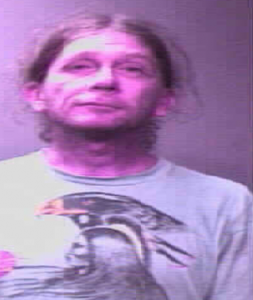
Michael Buttrey, a 48-year-old white male from Tulsa, Oklahoma, was known to those close to him as Michael Scott, a son, father, brother, and friend whose life revolved around music and family. He was born on September 22, 1973, in Dallas, Texas, to Terry Bitsko and Lou Buttrey, and in the memories shared after his death he is often pictured behind a drum kit or with a guitar in his hands, happiest when he was playing music or spending unhurried time with the people he loved.
Obituaries and memorial pages describe a man who had already known deep loss, having been predeceased by a son and a brother, yet who remained a steady presence for his surviving children, his mother, and his extended family.
On the evening of June 12, 2022, Michael was at home at the Parkview Terrace Apartments in west Tulsa, an aging complex near the intersection of 61st Street and Union Avenue. That Sunday night would have seemed ordinary to anyone looking in from the outside: another summer evening in a working-class neighborhood on the city’s west side, the kind of place where people knew each other by name and the rhythm of daily life was shaped more by family concerns than by the wider world. Inside his apartment at 1615 West 59th Street, which sat within the Parkview Terrace complex, Michael had no way of knowing that an argument elsewhere in the city would soon arrive, quite literally, at his front door.
Earlier that night, a 17-year-old named Darrin Corrie had argued with his mother about money, a dispute that escalated beyond the private frustration of a family disagreement. According to police and later news reports, Corrie went looking for her at Parkview Terrace, where she lived. When he did not find her in her own apartment, he continued his search within the same complex, heading to another unit where she sometimes spent time with friends and acquaintances. That second apartment was Michael’s home. When Corrie arrived at the door, he tried to get inside; Michael, who did not want him there, closed the door on him, drawing a line that should have been enough to end the encounter. Instead, it became the final ordinary act of Michael’s life.
Witnesses later told investigators they saw a young male at the door, kicking and pounding, trying to get in. In that confined hallway, the line between agitation and deadly violence vanished in an instant. Armed with a handgun, the teen fired a single shot through the closed apartment door. The bullet tore through the barrier and struck Michael in the torso, turning the thin slab of wood meant to mark the boundary of his home into no protection at all. Emergency responders rushed to the scene, but the wound was fatal; Michael later died from his injuries, his final moments unfolding not out in the open but just inside the apartment that had been meant to shelter him. Police emphasized that he had been an innocent resident, not the person the teen had come to the complex to find and not connected to the underlying family dispute that had sparked the confrontation.
The investigation moved quickly. Tulsa police identified the teenage shooter as their suspect and, within a day, secured a warrant for his arrest. News outlets reported that Corrie turned himself in to authorities on Monday, June 13, 2022, ending a brief manhunt that had left residents of the complex and Michael’s loved ones on edge. He was booked on charges of first-degree murder and first-degree burglary, accused of forcing his way into a situation where he did not belong and then pulling the trigger that ended a man’s life on the other side of a locked door. Gun violence databases later recorded the incident with stark economy: one adult victim killed, one teen suspect unharmed and arrested in connection with the shooting at Parkview Terrace.
In the months that followed, the legal case moved into the quieter realm of court dockets and filings, while the raw shock of the crime lingered most vividly among those who had known Michael in life. Online memorials filled with messages from family and friends paint a picture of a man who loved his children deeply and whose absence left a void that ordinary words struggle to fill. His obituary lists the relatives who survived him and notes the memorial service held later that June at a chapel in nearby Broken Arrow, where mourners gathered to remember not the circumstances of his death but the music he played, the laughter he shared, and the years they had with him before a single shot through a thin apartment door took him away. Public records and news coverage clearly document the arrest and charging of the teen suspect; they are quieter, however, about the ultimate outcome of the case, leaving the enduring image of Michael’s story as that of a man whose life was abruptly ended by violence that grew out of someone else’s unresolved anger.